
How to Finish Your Space After Your Landscaping Project Is Complete
You hired a landscaping company. You watched the crew work. You saw a patio go in, new garden beds take shape, maybe a retaining wall or a pool surround that didn’t exist before. And then the trucks pulled away, and you walked outside and thought: okay, now what?
A well-executed landscaping project transforms your property, but it also hands you a blank canvas. The hardscape is in. The plants are planted. The space is ready. What happens next is up to you, and how you approach it will determine how much you actually enjoy what you paid for.
Whether you just had a patio installed, a complete landscape redesign, or a new set of planting beds, here’s how to take a finished landscaping project and turn it into a space you genuinely live in.
What a Landscaping Project Does for Your Property
If you’ve never worked with a professional landscaping company before, it’s worth understanding what a design-build project actually delivers, because it’s more than plants and pavers.

Kettering, OH
A full landscape project starts with design: a landscape designer walks your property, listens to how you use your outdoor space, and develops a plan that accounts for your soil, your sun exposure, your grades and drainage, and your goals. From that plan, professional installers execute the work, whether that’s laying a paver patio, building a retaining wall, installing a pool surround, planting new garden beds, or all of the above.
What you end up with is a property that works better than it did before. Drainage problems get addressed. Overgrown or bare areas become intentional, attractive spaces. Hard surfaces give you a place to actually be outside rather than just look at your yard from the window. The bones are in place.
But the bones are just the beginning. Great landscaping creates possibilities. What you do with that possibility is what makes the difference between a yard that photographs well and one that your family actually uses every day.
Start With How You Want to Use the Space
Before you buy a single piece of furniture or string a single light, the most useful thing you can do is get specific about how you want to use your outdoor space. The answer shapes every decision that follows.
A few questions worth sitting with:
How do you entertain? If you host dinner parties, you need a dining setup, task lighting over the table, and enough surface space for food and drinks. If you host casually, comfortable seating and ambient lighting matter more than a formal arrangement.
Who uses the space most? A yard that needs to work for young kids looks different than one built around quiet evenings for two. Both are amazing; they just lead to different furniture, different layouts, and different priorities.
How much time do you actually spend outside? If the answer is “not much, but I want that to change,” think about what’s kept you inside over time. Too much sun? No shade solution. Bugs? That’s addressable. Nowhere comfortable to sit? Start there.
What’s the mood you’re after? Some people want a retreat, something quiet and private that feels removed from the rest of the day. Others want energy, a space that feels open and inviting. The finishing elements you add, from plant choices to lighting to furniture style, all contribute to that mood.
Getting clear on these questions before you start spending money will save you from furnishing a patio for a lifestyle you don’t actually have.
Furnishing a New Patio
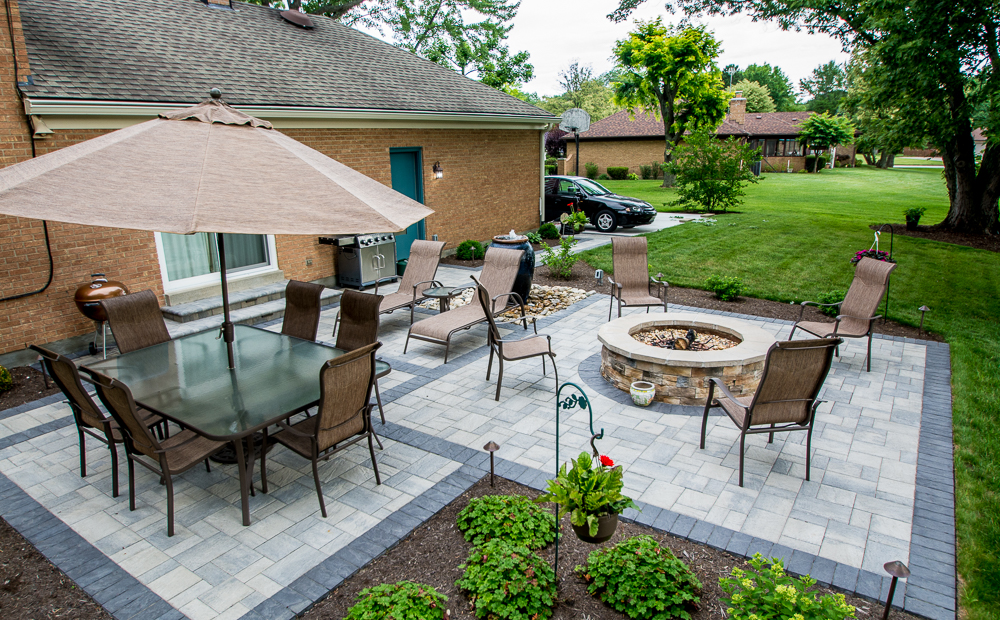
A patio is only as livable as what’s on it. If you’ve just had one installed, furniture selection is the single highest-impact finishing step you can take.
Miamisburg, OH
Think in Zones
If your patio is large enough, divide it mentally into zones before you start shopping: a dining zone, a seating or lounge zone, and possibly a transitional zone near a grill or outdoor kitchen. Defining zones keeps the space from feeling cluttered or accidental and ensures the patio actually functions the way you want it to.
Scale to the Space
One of the most common patio furniture mistakes is choosing pieces that are too small for the area. Undersized furniture on a generous patio makes the space feel empty and disconnected rather than inviting. Measure your patio before you shop, and look for scaled-up dining and seating options that fill the space with some room to move around. A general rule: leave 18 to 24 inches of clearance around dining chairs when they’re pulled out, and give seating arrangements a central anchor like a coffee table or fire table so the grouping feels intentional.
Add an Anchor Piece
Every finished outdoor space has one piece that defines the room. For a dining-focused patio, it’s often the table. For a lounge-focused space, it might be a sectional, a hanging chair, or a fire pit. The anchor piece gives the eye somewhere to land and makes the surrounding pieces feel organized around a purpose rather than randomly assembled.
Lighting: The Element That Changes Everything After Dark
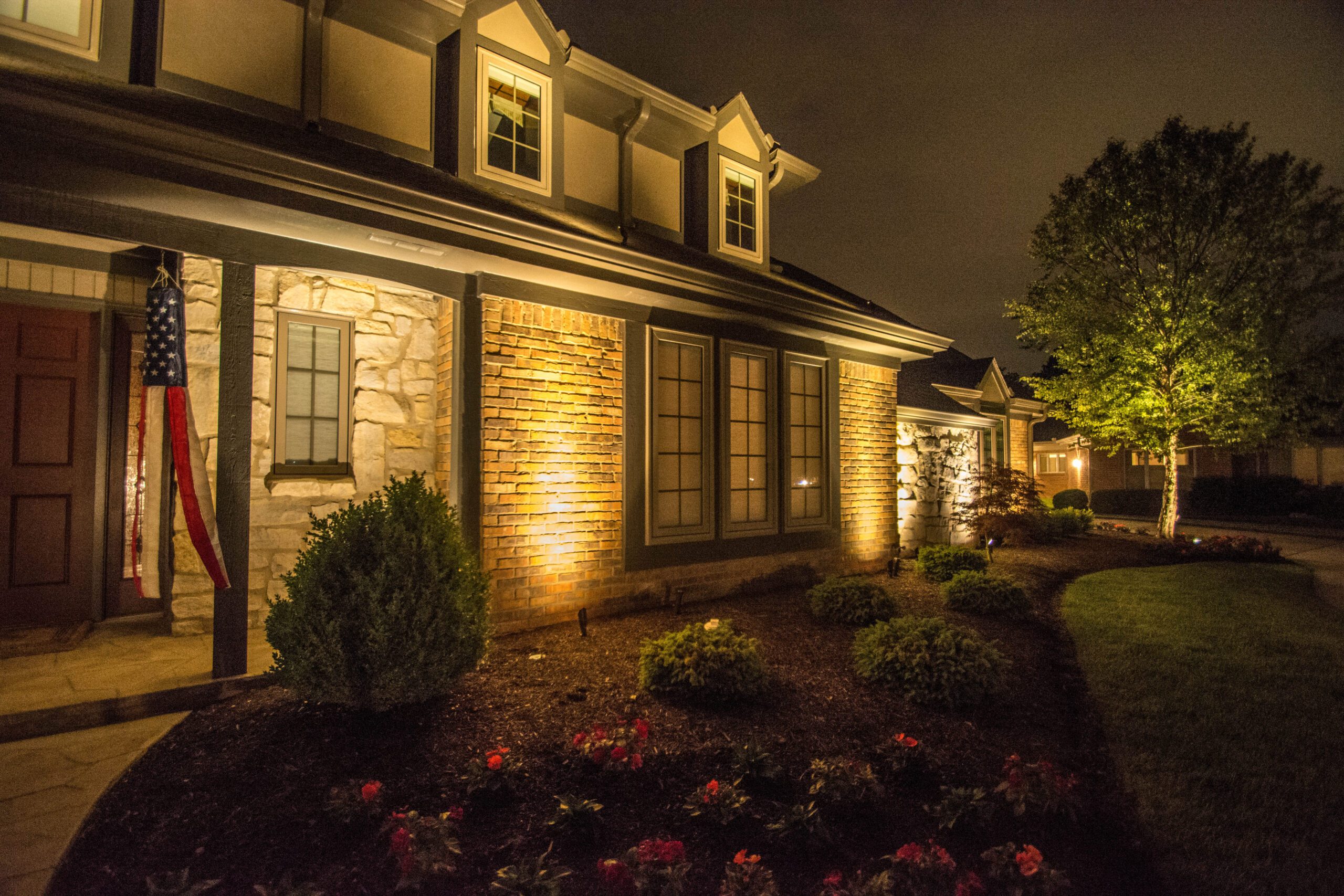
If there’s one finishing touch that consistently surprises homeowners with how much it changes a space, it’s landscape lighting. A patio that feels pleasant during the day becomes something else entirely with the right lighting in place. It extends how long you actually use the space into the evening and makes the property look finished and considered from the street.
Ambient Lighting for Atmosphere
String lights are among the most accessible ways to add ambient light to a patio. When done well, with lights strung between posts or anchored to a pergola rather than draped casually, they create a warm, even glow that works for almost any occasion. LED café-style string lights are durable enough for year-round outdoor use and draw very little power.
Task Lighting for Function
Mason, OH
If you have an outdoor dining area, make sure you have enough light over the table to actually see what you’re eating. Pendant lights under a pergola, a ceiling fan with an integrated light fixture, or well-placed wall sconces on an adjacent wall all accomplish this. Task lighting doesn’t have to be bright or harsh; it just needs to be sufficient.
Landscape Lighting for the Yard Itself
Professional low-voltage landscape lighting systems do something string lights and sconces can’t: they light the plants, trees, and hardscape elements that frame your outdoor space. Uplighting at the base of a specimen tree creates drama and visual depth. Path lights along a walkway improve safety and define the edges of the space at night. Wash lighting directed across a planting bed or the face of a retaining wall makes the whole yard feel designed rather than dark.
If you’re considering landscape lighting and you have other hardscape work in the future, note that running conduit before pavers are laid or concrete is poured is significantly less expensive than adding it after. It’s worth talking to your landscaper about future plans before a project closes out.
Smart Controls
A timer or smart switch is worth adding to any outdoor lighting system. Lights that come on automatically at dusk and go off at a set hour are more likely to actually get used than lights that require someone to go out and flip a switch.
—Looking for some front yard landscaping ideas? Read our blog!
Irrigation: Protecting Your Investment
A professionally designed and installed landscape represents a real investment in plant material. Irrigation is part of what protects it.
Established plants in Southwest Ohio (USDA Hardiness Zone 6b) can handle drought reasonably well. Newly installed plants cannot. The first growing season after a landscape installation is the most critical for plant establishment, and consistent, deep watering during that period makes the difference between plants that thrive long-term and plants that struggle for years or never fully recover from transplant stress.
A drip irrigation or soaker hose system for garden beds delivers water directly to root zones with minimal waste. An in-ground irrigation system for lawn areas can be zoned and timed to water efficiently without requiring any ongoing attention. If you already have an irrigation system, confirm with your landscaper that any new beds or plant material are covered by the existing zones, and that the scheduling reflects current plant needs rather than what was appropriate before the project.
Your landscaping company can also help you understand what your new plants need in terms of watering frequency. Newly installed plant material, particularly trees and large shrubs, often needs more consistent attention than homeowners expect in the first season.
Privacy and Shade: Making the Space Usable
A beautiful patio that gets full afternoon sun in an Ohio summer, or that sits fully exposed to a neighbor’s sightline, is a space that doesn’t get used as much as it could. Privacy and shade are often the deciding factor in whether an outdoor space becomes a genuine extension of the home.
Shade Solutions
A pergola provides structure and can support climbing plants, string lights, fabric shades, or motorized canopies, depending on how much coverage you want. A sail shade is a lower-cost option that can be installed without a permanent structure. A large market umbrella works well for a dining area where you want adjustable coverage rather than something permanent.
West Chester, OH
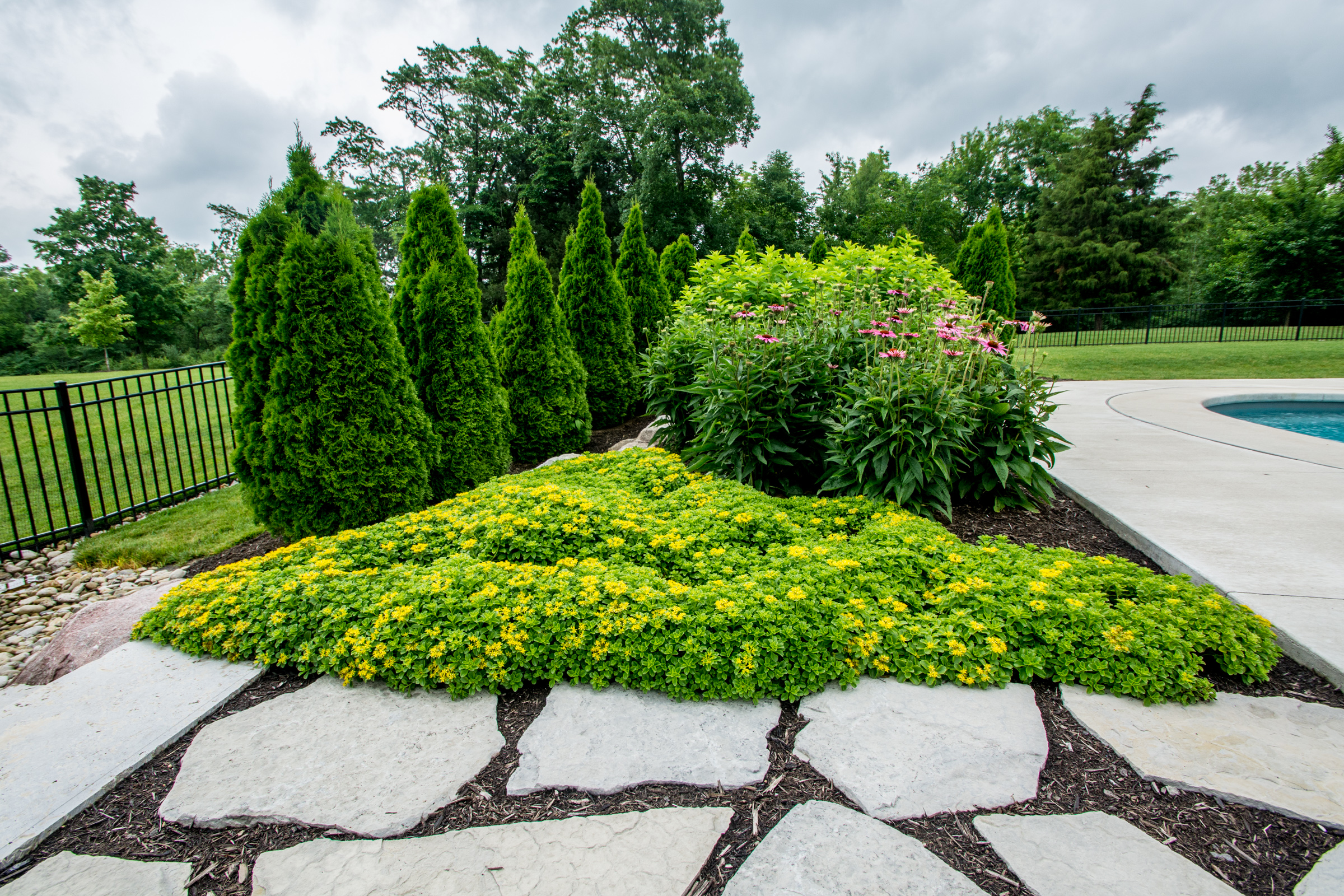
For long-term shade, the right tree planted in the right location will eventually do more than any structure. Eastern redbuds, serviceberries, and smaller ornamental trees planted near a patio can provide meaningful dappled shade within a few years while adding seasonal interest. Your landscaper can advise on what makes sense for the specific orientation and sun exposure of your space.
Privacy Plantings
A row of arborvitae, a mixed privacy hedge, or a combination of ornamental grasses and shrubs can screen a sightline without the hard, constructed feel of a fence. Plantings have the added advantage of softening the edges of a space and making it feel more enclosed and intentional without walling it off entirely. If privacy is a priority, mention it to your landscaper during the design phase; it’s much easier to integrate into a plan than to address after installation.
How Ongoing Maintenance Keeps It Looking the Way It Did on Day One
Your landscaper’s job doesn’t have to end when the project wraps up. Ongoing maintenance is what keeps the investment performing the way it should.
A professional landscape maintenance program, like Grunder’s LandKeeping services, handles the seasonal work that keeps a property looking its best: spring and fall cleanups, mulching, pruning, fertilization, weed management, and the bi-weekly horticultural visits that catch small problems before they become large ones. That consistent professional attention is what makes the difference between a landscape that looks great in year one and one that still looks great in year five and ten.
As a homeowner, there are a few simple things that go a long way between professional visits:
- Water new plantings consistently in the first season. Even if rain has been adequate, check new plants weekly and supplement when needed. New root systems are shallow and dry out faster than established plants.
- Don’t mow too short. Cool-season grasses in Ohio do best at three to four inches. Cutting shorter stresses the lawn and invites weed pressure.
- Pull weeds when they’re small. A few minutes of weeding after a rain, when the soil is soft, keeps beds manageable. Left alone, weeds compete with desirable plants for water and nutrients.
- Keep the patio clean. Sweeping and rinsing paver surfaces periodically, and re-sanding joints when they start to thin out, prevents weed establishment and keeps the surface looking finished. Sealing every few years extends the color and protects against freeze-thaw damage.
- Watch your plants. A plant that’s yellowing, dropping leaves out of season, or showing unusual growth patterns is often signaling a problem that’s easier to address early. If something looks off, ask your landscaper to take a look at the next visit.
A landscaping project gives your property structure, plants, and hardscape. The finishing layer, the furniture you choose, the lighting you add, the way you decide to use the space for the life you actually live, is what makes it feel like yours.
Most homeowners don’t need to do all of this at once. Start with the element that will change how you use the space most: furniture if you don’t have anywhere to sit, lighting if the space goes dark and unused after dinner, shade if the afternoon sun is keeping you inside. Build from there over time, and let the space evolve with how your family uses it.
The goal isn’t a finished outdoor room that photographs well. It’s a space you actually want to be in, season after season.
About Grunder Landscaping Co.
Grunder Landscaping Co. has been designing, installing, and maintaining landscapes in Dayton since 1984 and in Cincinnati for more than a decade. If you’re ready to turn your property into a space your family actually uses and enjoys, we’d love to help you get there. Whether that means starting with a design-build project or building on what you already have, our team is here to help you take the next step.
get started