
You water, you mow, you fertilize, and the grass still looks thin in spots. A lot of the time the problem is underground. Ohio soil is heavy on clay, and when it gets packed down, water and nutrients have a hard time reaching the roots. Lawn aeration fixes that by giving your soil room to breathe again. Here’s what it is, when to do it, and how to make it count.
What Is Lawn Aeration?
Lawn aeration means making lots of small holes in your lawn so air, water, and nutrients can get down to the grass roots. Everyday life packs soil down over time. Kids, dogs, mowers, and heavy rain all play a part. There are two main ways to do it: core aeration and spike aeration.
Core Aeration
Core aeration is the kind most lawn pros recommend. A machine pulls small plugs of soil out of the ground and leaves them on top of the lawn. Each plug is about the size of your finger, usually two to three inches long, with a few inches between holes.
Spike Aeration
Spike aeration simply pokes holes in the ground without pulling any soil out. It’s quick, but it doesn’t do much in clay. Pushing a spike into the ground squeezes the soil around the hole even tighter, so it can actually make compaction worse.
Why Aeration Matters for Soil Compaction
Compacted soil is soil that’s been squeezed so tight there’s no room left for air and water. Grass roots can’t push through it easily, so they stay short and close to the surface. Short roots dry out fast, so compacted lawns are often the first to brown in July.
A few signs your soil might be compacted:
- Water puddles or runs off instead of soaking in
- A screwdriver is tough to push into the ground, even after rain
- Grass is thin along paths and play areas
- Bare spots keep coming back even after you seed them
When to Aerate Your Lawn
Most Ohio lawns are cool-season grasses like tall fescue and Kentucky bluegrass, and for those, early fall is the best time to aerate. Think late August through October. The ground is still warm, the air is cooler, fall rain helps out, and weeds aren’t fighting for space, so your grass bounces back quickly.
Early spring works too, once the grass is green and growing. Just plan ahead if you use a crabgrass preventer. Aerate before it goes down, and know that most crabgrass preventers also stop grass seed from sprouting. Warm-season grasses like zoysia do best with late spring or early summer aeration.
How often depends on your yard. Heavy clay or a lot of foot traffic? Plan on once a year. Looser soil and a quiet yard can usually go two or three years between aerations.

How to Aerate
Hand Aerators
These look like a pitchfork you step on to push into the ground. They’re fine for one small patch but don’t pull out soil.
Manual Core Aerators
These step-on tools pull out real plugs. They do a good job in small spots, but doing a whole lawn this way is a serious workout.
Spike Rollers
Spike rollers and spiked shoes poke holes as you push or walk. They’re easy to use, but they come with the same downside as any spike tool.
Hiring a Lawn Care Professional
For bigger yards, heavy clay, slopes, or seeding at the same time, a pro will get you better results. Ask for a written plan that spells out timing, seeding, fertilizer, watering, and cost.
Preparing Your Lawn for Aeration
A little prep goes a long way:
- Flag your sprinkler heads so they don’t get hit.
- Mark what’s underground. Call 811 a few days ahead to have utility lines marked. They won’t mark private lines, so flag septic lines, invisible dog fences, and lighting wires yourself.
- Pick up toys, hoses, and sticks.
- Mow a little shorter than usual the day before.
- Water lightly the day before so the soil is damp but not muddy.
Overseeding, Fertilizer, and Watering
Right after aeration is the best time to spread grass seed. Seed that falls into the holes gets great contact with the soil, so focus on bare and thin spots and the areas people see most. A starter lawn fertilizer helps the new grass get going, and a thin layer of compost adds a little extra boost.
If you seeded, keep the soil damp with short, frequent waterings until the grass sprouts. Hold off on mowing for about a week, or until the new grass is tall enough to cut if you seeded.
Mistakes to Avoid

Rolling the Lawn Afterward
A heavy roller packs the soil right back down. If you have bumps, fill them in a little at a time with soil or compost.
Aerating Soggy Ground
Muddy soil clogs the machine and gets packed down even more. Wait a few dry days after a heavy rain.
Aerating Too Often
Aeration gives your lawn a small workout each time. Once a year is plenty for most yards.
Raking Up the Plugs
The plugs look messy, but leave them be. They break down on their own in a couple of weeks and feed the soil as they go.
Benefits for Long-Term Lawn Care
Water and fertilizer reach the roots instead of running off, so you get more out of what you’re already putting down. Roots grow deeper, which helps your lawn handle hot, dry summers. A thicker lawn also leaves less room for weeds like crabgrass to move in. Fall aeration also gives grass a head start for a stronger spring.
 About Grunder Landscaping Co.
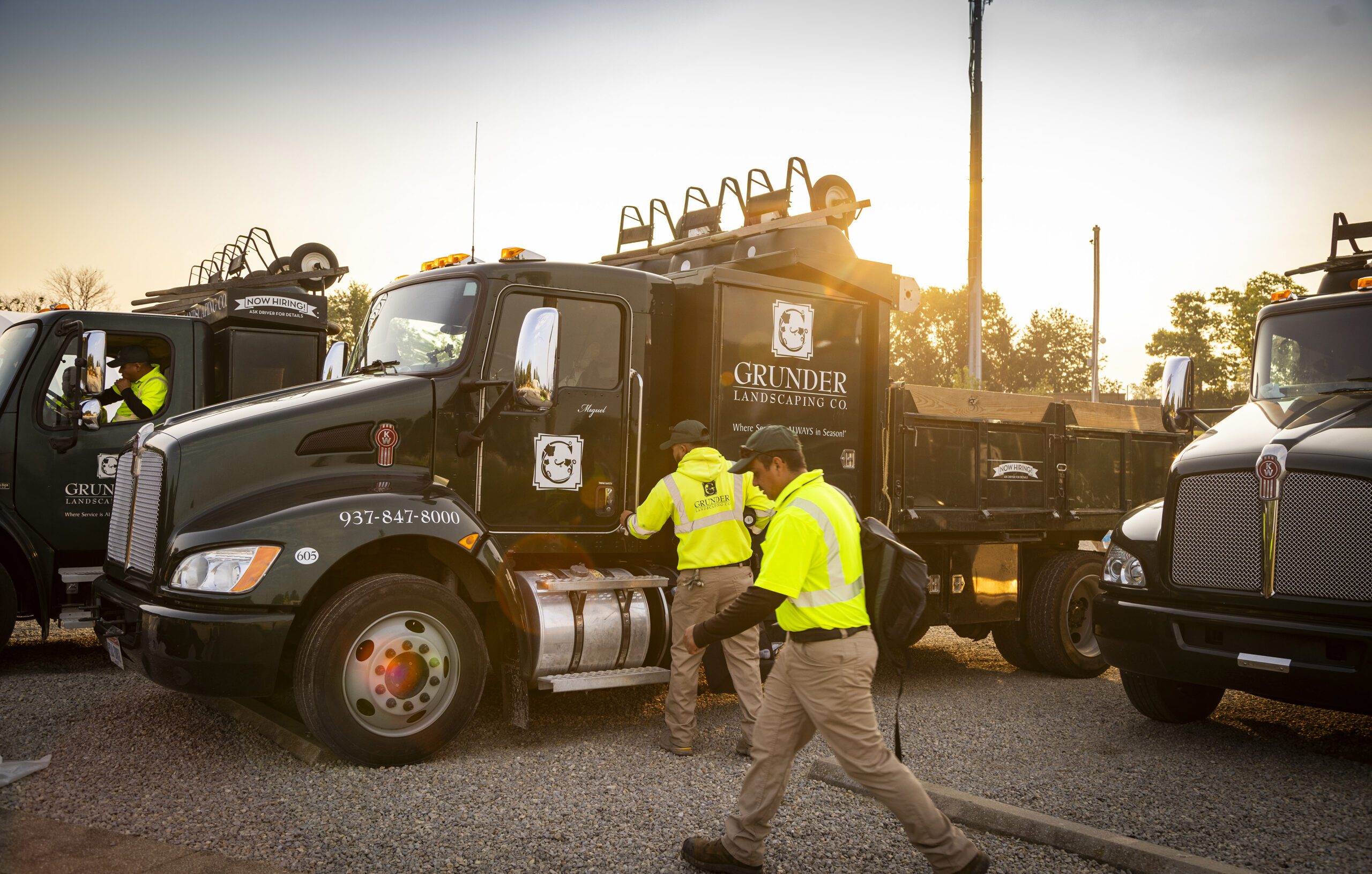
Grunder Landscaping Co. has been designing, installing, and maintaining landscapes in the Dayton area since 1984 and the Cincinnati area since 2010. We know this climate well, from the clay soils that pack down year after year to the hard winters that test Ohio lawns. Our aeration and overseeding service runs every fall, when cool-season grass recovers fastest. Whether you’re starting from scratch or improving what you have, our team is here to help. Contact Grunder Landscaping to get started.
get started