
Pavers vs Concrete for Patios: Which One Is Right for Your Home?
When many homeowners start planning a new patio, the choice between pavers and concrete comes up quickly. Both are proven patio materials with distinct advantages, but they behave differently over time, especially in freeze-thaw climates like Ohio’s. Budget, soil conditions, how you plan to use the outdoor space, and how much upkeep you want to take on all factor into the decision.
This guide compares paver patios and concrete patios across the factors that actually matter, so you can go into your hardscape project with a clear picture of what you’re choosing and why.
Quick Comparison
Factor |
Pavers |
Concrete |
|---|---|---|
| Upfront cost | Higher initial cost | Lower upfront cost |
| Durability in freeze-thaw climates | Strong | Moderate to poor without proper control joints |
| Design options | High | Moderate (more with stamped concrete) |
| Repairability | Easy (replace individual pavers) | Difficult (patches are visible) |
| Maintenance | Occasional cleaning, re-sanding joints as needed | Sealing recommended; concrete slab cracks require patching |
| Long-term value | Strong | Good if properly maintained |
| Drainage | Permeable options available | Generally impermeable |
Appearance and Design
Pavers
Job Location: Mason, OH
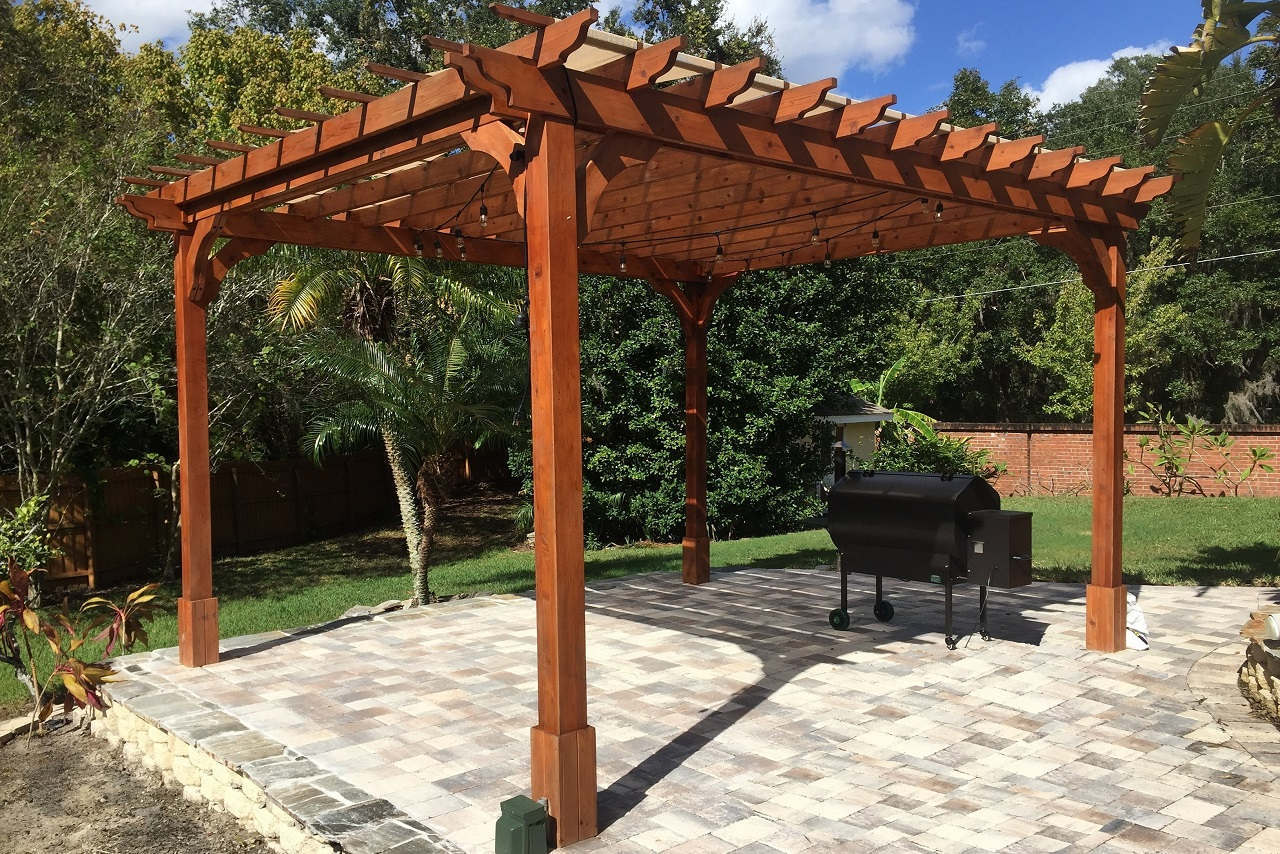
Concrete pavers and natural stone pavers give you a level of visual flexibility that a poured concrete slab simply cannot match.
Patio pavers come in a wide range of colors, shapes, and sizes, from clean rectangular paving stones to tumbled brick pavers with a more traditional look.
You can create running bond patterns, herringbone, basket weave, or custom designs that incorporate multiple colors and sizes. Natural stone pavers, including bluestone, limestone, and travertine, bring natural variation in color and texture that manufactured materials can approximate but rarely replicate.
The modular nature of paver installations also means a skilled designer can adapt the layout to irregular spaces, curved edges, or outdoor living spaces with features like fire pits and outdoor kitchens without the layout looking forced. Pavers integrate naturally into larger landscape design in a way that a concrete slab can struggle to achieve.
Concrete
A standard concrete slab has a clean, uniform appearance that works well for simple, rectilinear spaces where the design goal is function over form. Stamped concrete and stained concrete expand those options considerably: stamped finishes can mimic the look of slate, flagstone, brick pavers, or wood grain, and stained concrete is available in a range of colors that can enhance curb appeal on a tighter budget.
The honest caveat with stamped concrete: the aesthetic appeal is real when new, but color fades over time and the stamped pattern does not change the underlying material’s behavior. Stamped concrete still cracks, and a crack through a stamped pattern is harder to address than a crack in a standard slab. Decorative concrete is a cost-effective option when budget is the primary constraint, but it’s worth understanding the tradeoff.
Curb Appeal Over Time
Pavers tend to enhance curb appeal and hold it better over the long term. A paver surface that settles unevenly can be releveled by lifting and resetting individual pavers. Concrete that cracks or heaves is harder to restore to an attractive condition. That said, a properly maintained concrete patio can look good for many years. The difference tends to show up in decade two.
Durability and Weather Performance
Southwest Ohio’s climate sits primarily in USDA Hardiness Zones 6a and 6b, with hard freezes every winter and ground that freezes and thaws multiple times each season. Extreme temperature changes put real stress on any hardscape project installed without accounting for that movement, and clay-heavy soils make the challenge worse.
Concrete in Freeze-Thaw Climates
Poured concrete slabs are rigid, which is both a strength and a liability. When the ground beneath them shifts with freeze-thaw cycles, concrete slab cracks and heaving are the typical result. Clay soils compound the problem because clay expands when wet and contracts when dry, creating ongoing movement beneath the slab. Control joints are cut into concrete to give it a place to crack predictably, but cracks still happen, and they are difficult to repair invisibly.
When a section of slab settles or lifts, you’re dealing with a trip hazard and a structural integrity concern that typically requires grinding down the raised edge or replacing the affected section. Neither option looks great, and neither is cheap.
Pavers in Freeze-Thaw Climates
Job Location: Loveland, OH
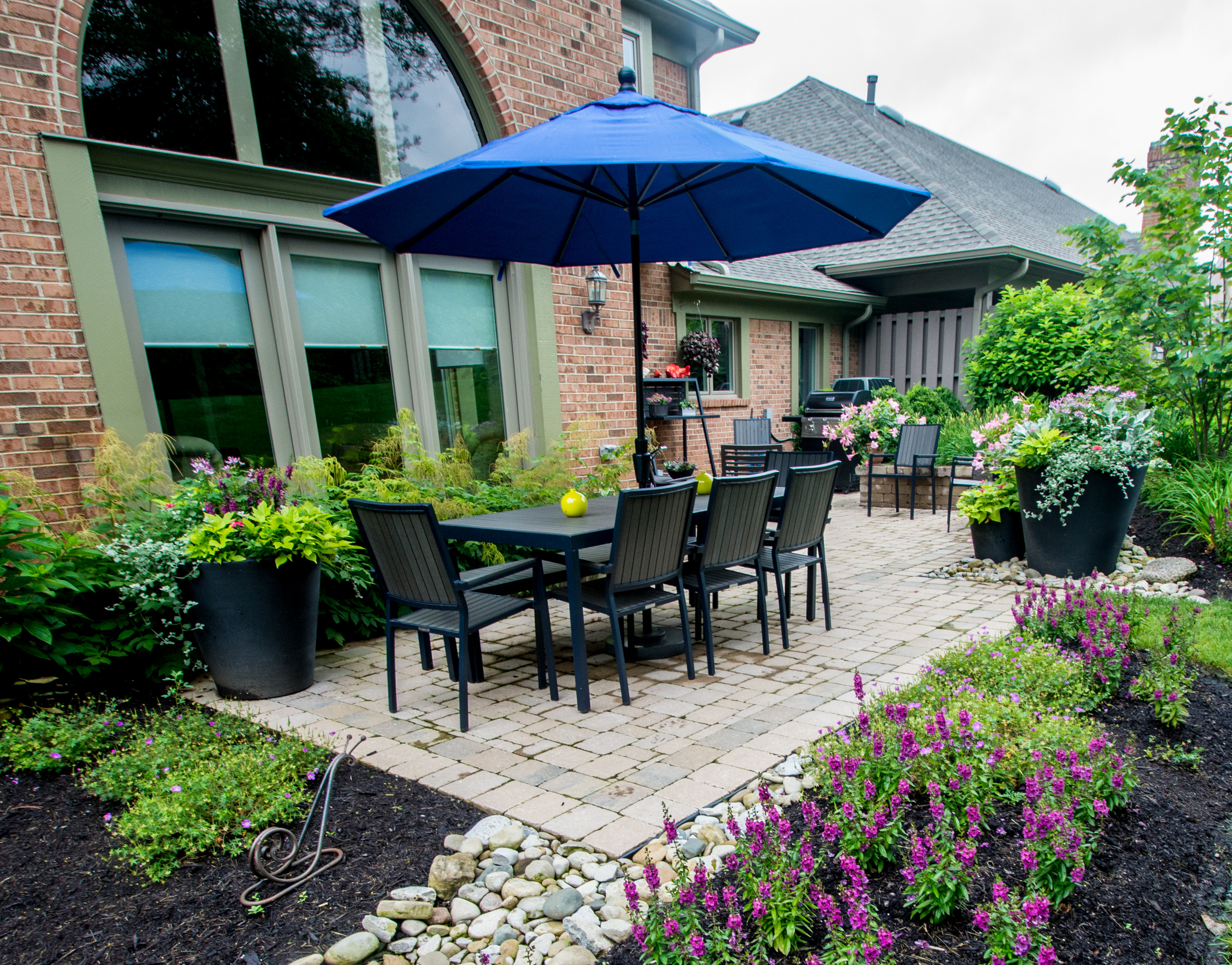
Interlocking paver systems are designed to move. The joints between pavers allow for minor shifting without cracking, and individual pavers can be lifted and reset if settling occurs. This flexibility is one of the most significant practical advantages pavers offer over poured concrete in freeze-thaw climates, where ground movement is a given rather than an exception.
A properly installed paver patio with adequate base preparation and edge restraints also handles high traffic areas, heavy outdoor furniture, and the weight of outdoor kitchen structures well over time. The paver surface holds up without the structural concerns a concrete slab can develop under similar conditions.
The Installation Process
Paver Installation
A properly installed paver patio starts well below the surface. The paver installation process includes excavation, compacted gravel base layers, a bedding layer of coarse sand, and then the pavers themselves. Edge restraints are installed to keep the field from spreading. Joints are filled with polymeric sand, which is swept in and activated with water to lock the pavers together and resist weed intrusion.
The process is labor-intensive and time-sensitive, particularly the base compaction steps. Shortcuts in base preparation are the most common reason paver patios fail early. Paver installations typically take several days to a week for a standard residential patio, depending on size and complexity.
Concrete Patio Installation
Concrete installation involves setting formwork, placing steel reinforcement or wire mesh, pouring and finishing the concrete, and cutting control joints before the slab fully cures. The concrete typically needs 28 days to reach full strength, though it’s walkable within a day or two.
Poured concrete can be completed faster than a paver installation for a straightforward project, and the lower upfront cost makes it appealing for large, simple surfaces. The tradeoff is that errors or settling are much harder to correct after the fact.
Maintenance and Repair
Paver Maintenance
Job Location: Kettering, OH
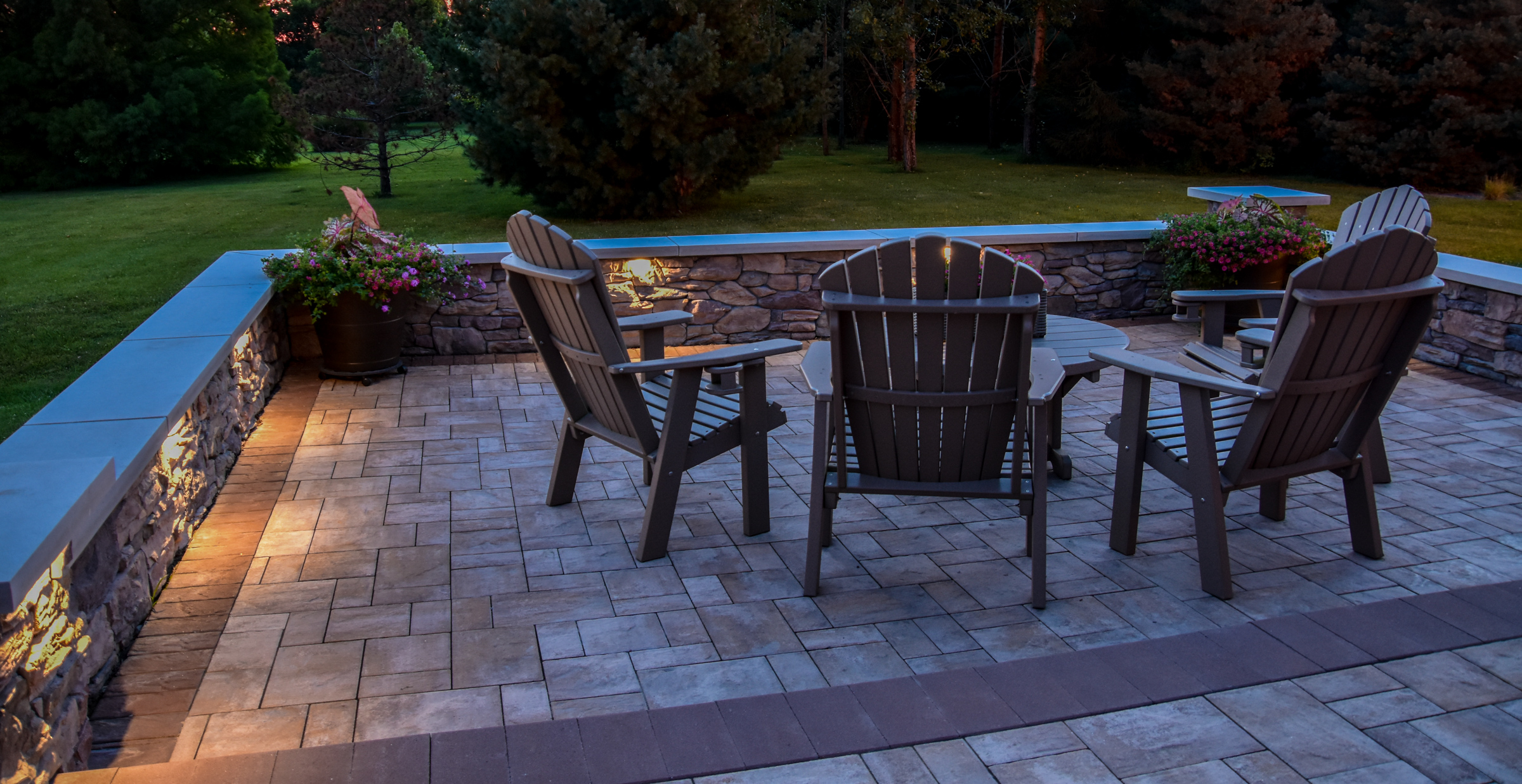
Paver patios are genuinely low maintenance when installed correctly. Routine upkeep means occasional cleaning, periodic inspection of the joints, and re-sanding with polymeric sand if the joints thin out over time. Sealing is optional but extends color life and makes the paver surface easier to clean. Weeds in the joints are the most common complaint, and they are manageable with polymeric sand and occasional spot treatment.
The bigger maintenance advantage is easier repairs. You can replace individual pavers if one cracks, settles, or is damaged. If a utility line needs to be accessed beneath the patio, the pavers can be pulled up and relaid. That kind of flexibility simply does not exist with a poured slab.
Concrete Maintenance
Concrete costs less to install, but it requires more attention over time to stay in good shape. Sealing every few years protects against water infiltration and freeze-thaw damage. Hairline cracks are common and mostly cosmetic. Larger cracks can be patched, but the repair will be visible. Resurfacing with a decorative overlay can restore the appearance of a worn or cracked slab, but it adds cost and has its own lifespan to manage.
When a concrete slab is significantly cracked, heaved, or settled, the practical answer is usually full replacement. That’s a larger investment than most homeowners anticipate when they choose concrete for its lower upfront cost.
Cost and Long-Term Value
Concrete has a lower upfront cost, and the gap between the two materials is real. For homeowners working with a tight budget, concrete is an alright choice for a simple patio. The long-term value picture shifts, though. A properly installed paver patio can last 30 years or more with minimal maintenance. Concrete that develops significant cracking in year 10 or 15 may require resurfacing or replacement, which can close much of that original cost gap per square foot over the life of the project. Get a site-specific quote for both options before finalizing your budget, since material selection, pattern complexity, and site conditions all affect the final number.
Pavers also tend to increase property value more meaningfully than concrete, particularly for homes where outdoor living spaces are a selling point.
Drainage and Environmental Considerations
Standard poured concrete is essentially impermeable. Water runs off the surface and must be directed somewhere, which can create drainage challenges on sites already managing stormwater. Permeable paver systems address this directly: installed with open-graded bases and wider joints, they allow water to infiltrate through the patio rather than running off, meaningfully reducing runoff from the property. If drainage is a concern on your site, permeable pavers are worth discussing with your designer before committing to a patio material.
Pavers also offer a practical advantage if grading needs to be adjusted after installation. The surface can be modified without starting over, which is not an option with a concrete slab.
Job Location: Lebanon, OH
Pavers vs Concrete for Patios: Which Material Is Right for Your Patio
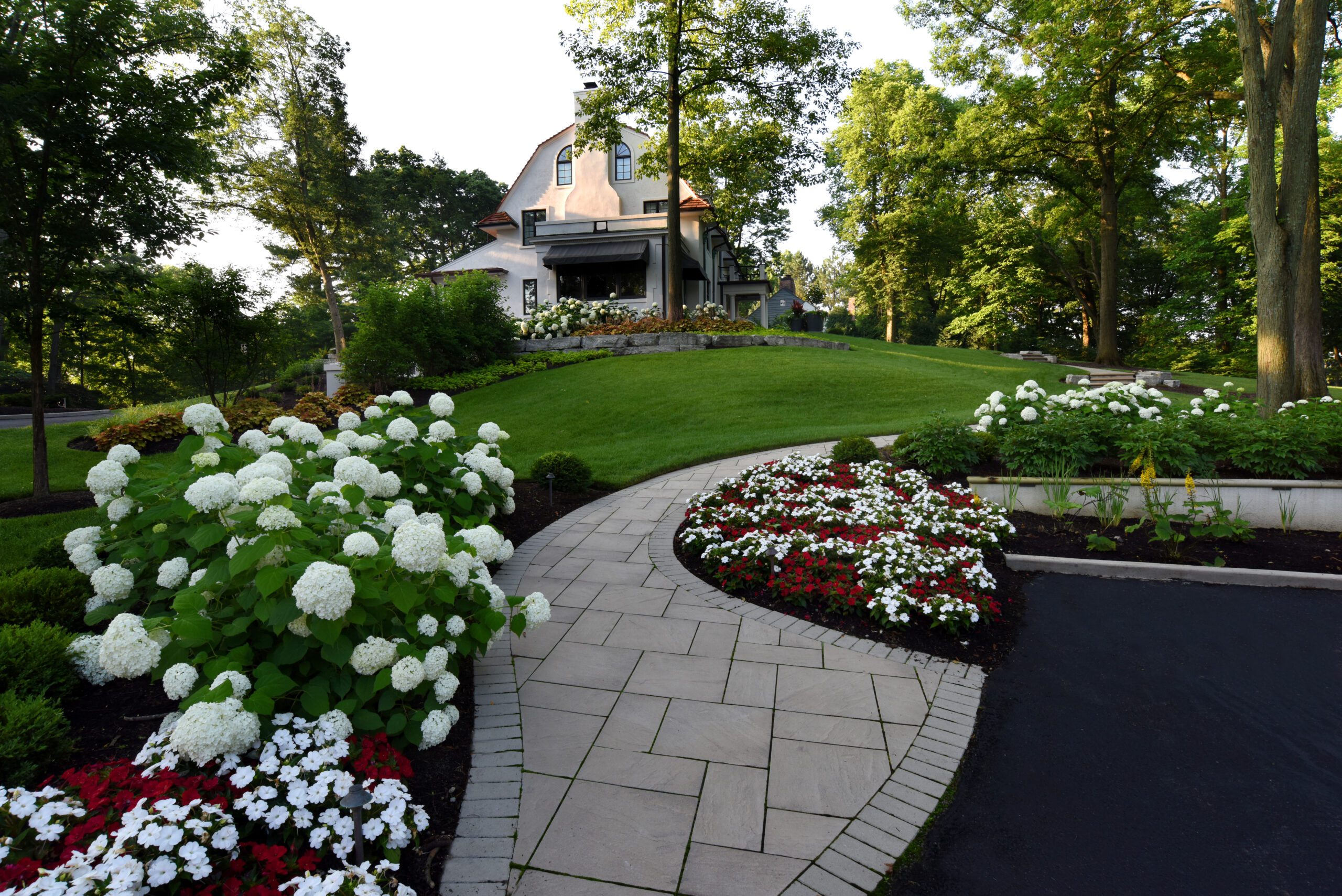
For most homeowners in colder climates dealing with clay soils and hard winters, pavers are the more durable long-term choice. The joints that give paver patios their modular appearance are also what allow them to flex with the ground rather than crack against it. For projects involving pool decks, irregular shapes, or integration with other hardscape elements like outdoor kitchens or fire features, pavers handle the complexity more naturally and hold up better over time. Slip resistance is another reason pavers are the preferred patio material around pools and other wet outdoor areas.
Concrete is a reasonable choice for a straightforward, flat surface on a limited budget, particularly when the site has stable, well-drained soils and the design is simple. The tradeoffs are worth understanding upfront: concrete vs pavers comes down in part to how much long-term value and repairability matter relative to lower initial cost.
Want some other tips? Read our blog: Front Yard Landscaping Ideas for Ohio Homes
About Grunder Landscaping Co.
Grunder Landscaping Co. has been designing, installing, and maintaining landscapes in the Dayton area since 1984 and the Cincinnati area since 2010. We know this climate well. Everything from the hard winters that test Zone 6b plants and the microclimates to the plants that consistently perform beautifully in southwest Ohio. Whether you’re starting from scratch or looking to improve what you have, our team of horticulturalists and designers is here to help you make smart decisions for your property.
get started