
5 Steps for How and When to Fertilize Your Lawn in Ohio
In order to get a thick, green lawn in Ohio, you need to think about feeding your grass the right nutrients at the right time.
Ohio lawns are made up of cool-season grasses like Kentucky bluegrass, tall fescue, and perennial ryegrass. These grasses have two big growth pushes, one in spring and one in fall, and they slow down or go dormant during summer heat and winter cold. Knowing when to fertilize your lawn in Ohio means working with those natural rhythms instead of against them.
Why Homeowners Fertilize in the First Place
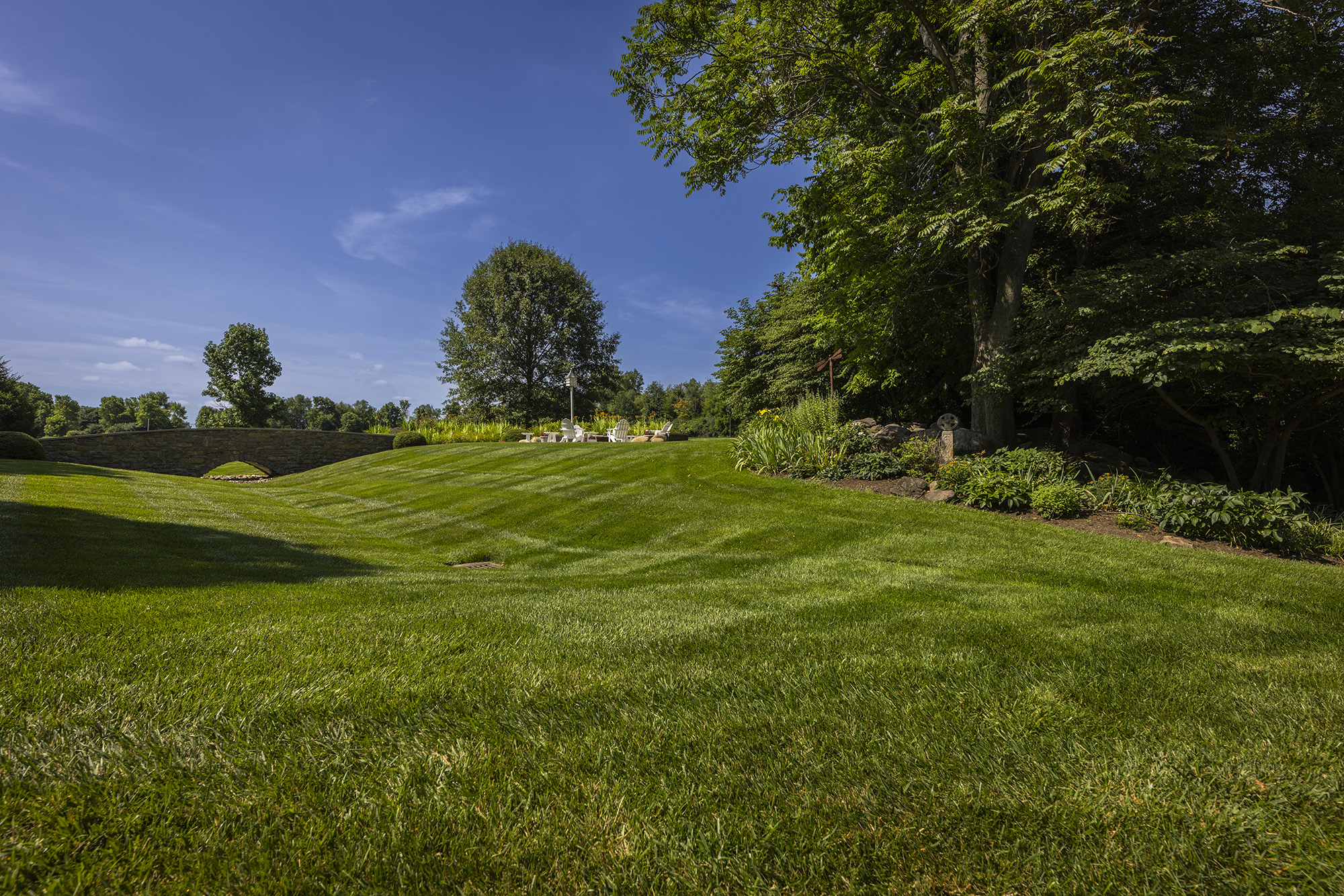
Homeowners look into fertilizing their lawns for a number of reasons, including:
- The color is off. The grass looks pale, yellow-green, or tired instead of deep and rich. That is almost always a nitrogen story.
- Weeds are winning. Dandelions, clover, crabgrass, and other weeds move into thin, underfed turf because there is room for them. A dense, well-fed lawn crowds most weeds out before they start.
- The lawn is thin or patchy. Bare spots, worn paths, and areas that never fill in point to grass that lacks the nutrients to spread and recover.
- It never bounces back. A lawn that browns out every summer and limps into fall usually has a weak root system, and consistent, season-long feeding is what builds the strong root growth that helps it recover over time.
- Curb appeal and value. Sometimes the goal is simply a lawn that looks cared for and holds its own in the neighborhood.
Fertilizer addresses all of these at the source, because they are usually symptoms of a lawn that is not getting the right nutrients when it needs them. A healthy lawn comes down to feeding the grass what it needs on the right schedule, and the trick is doing it correctly, which is where the rest of this guide comes in.
Quick Ohio Lawn Fertilizer Calendar
Here is the short version before we get into the details. Most Ohio lawns do best with feedings timed to these seasonal windows:
| Season | Timing | What to Do |
|---|---|---|
| Early Spring | March to mid-April | A light feeding as the grass wakes up, paired with a crabgrass pre-emergent before the soil warms to 55°F. |
| Late Spring | Mid-April to May | A maintenance feeding to fuel strong growth, plus broadleaf weed control. |
| Early Summer | May to June | A light feeding only if needed; start scouting for grubs and other lawn pests. |
| Mid Summer | July to August | Ease off nitrogen during extreme heat; a light slow-release feeding only if the lawn is stressed. |
| Early Fall | August to September | The prime feeding for strong root growth, and the best window to aerate and overseed. |
| Late Fall | October to November | A winterizer feeding to harden the lawn for winter dormancy. |
Fall fertilization is the highest priority feeding for cool-season grasses. According to OSU Extension, Ohio lawns should get the bulk of their annual nitrogen in fall, when roots drive active root development and store energy for winter and the following spring.
How Lawn Fertilizer Works
Turfgrass needs about sixteen nutrients to grow well. Most come free from air, water, and soil, so the three you manage are the ones printed on every fertilizer bag: nitrogen, phosphorus, and potassium, or N-P-K.
Nitrogen
Nitrogen (N) drives green color and leaf growth. It is the main ingredient in chlorophyll, which grass uses to turn sunlight into energy, and it is the nutrient your lawn burns through fastest and is the hardest for plants to find.
Phosphorus
Phosphorus (P) builds roots and helps new grass establish. Because excess phosphorus runs off into waterways, many established lawns do not need much of it, and a soil test will tell you whether yours does.
Potassium
Potassium (K) helps plants against stressors. It strengthens the plant’s vigor against drought, cold, disease, and foot traffic.
Those three numbers on the bag are percentages by weight. A 20-5-10 bag is 20 percent nitrogen, 5 percent phosphorus, and 10 percent potassium, with the rest made up of carriers that help the product spread evenly.
Once they’re applied, the nutrients dissolve and move down into the soil, where the roots take them up. That nutrient absorption is why you hear about “watering your fertilizer in.” Without watering it in, the nutrients stay on the blades, never going down to the roots where they can do their job.
Steps for Fertilizing Your Ohio Lawn
Step 1: Test Your Soil
This process gets easier once you know what your soil is missing. A soil test reveals your pH and nutrient levels, which tells you what to apply and, just as importantly, what to skip. It is the single best way to avoid dumping phosphorus your lawn does not need or chasing a color problem that is really a pH issue.
You do not need to test every year. Every two to three years is plenty for most lawns. Visit the OSU Extension website, locate your county, look under the programs tab, and find soil testing. There, you’ll find great information on how to complete a soil test and where to send it. This is great for lawn care, but also for the rest of your garden. Seasoned gardeners and horticulturalists know that the health of the soil is the main thing that determines the health of the plant!
Step 2: Choose the Right Type of Fertilizer
Box stores have a lot of options when it comes to fertilizer. There are many different types, and you might have heard good and bad things about any one of them. It can be difficult to know which one is right for the needs of your specific lawn. Here’s a quick breakdown of some differences you might see.
Slow-Release vs Quick Release
Quick-release (fast-release) fertilizers dissolve immediately and green the lawn up within days, but they only feed for a couple of weeks and carry a higher risk of burning your turf. Slow-release fertilizers feed steadily over six to eight weeks or more, are far gentler, and build lasting health rather than a short-lived flush of growth. Many people choose the quick-release because they want immediate results. Really, all that you’re getting is more trips to the store for more fertilizer because it’s designed to have you coming back for more. As is true for most things in life, choose the thing that might not make the biggest impact tomorrow, but will have the best impact over time.
Granular vs Liquid
Granular products are spread dry and watered in, and they are the standard for most homeowner applications. Liquid fertilizers are sprayed and absorbed quickly. It comes down to the quality of the product, so read a ton of reviews and pay attention to how long people say it lasts and how often they have to buy more. Granular is typically the better, longer-lasting option and is what most professionals use.
Organic vs Synthetic
Organic fertilizers come from natural materials like compost or Milorganite, release slowly, and improve soil health over time. Synthetic fertilizers are manufactured, act faster, and let you dial in an exact nutrient ratio. Neither is automatically better.
So what makes a high-quality fertilizer? Look for a percentage of slow-release nitrogen, an N-P-K ratio matched to your soil test and the season (cool-season lawns often do well with a nitrogen-forward ratio in the range of 4-1-2), and the inclusion of micronutrients like iron, which deepens color without forcing excess growth. A cheap bag of straight quick-release nitrogen can green a lawn up fast, but the best products have quality slow-release nutrients that keep it healthy throughout the year.
Step 3: Feed on Ohio’s Seasonal Schedule
Adhering to a schedule that aligns with Ohio’s seasons is going to set you up for success. You don’t want to just put it down randomly and hope for the best. So here are some guidelines:
Early Spring
Resist the urge to fertilize the moment the snow melts (we know it’s tempting once the sun comes out and the temps warm a little bit). Cool-season grasses are not awake until the soil warms up enough. So doing it too early will cause the nutrients you put down to just sit unused and wash away with spring rain. You need to wait until the grass is greening up on its own, which usually lines up with soil temperatures reaching the 50 to 55°F range, often from late March into mid-April in southwest Ohio. You can purchase affordable soil thermometers online or at your garden center to know for sure.
Crabgrass:
This is also your crabgrass prevention window, and it is unforgiving. Crabgrass seeds germinate once soil temperatures at a 2-inch depth hold around 55°F for several consecutive days, so you need to apply a crabgrass pre-emergent before that happens to form its barrier. Many programs combine this first light feeding with the crabgrass pre-emergent in a single pass.
Late Spring
Six to eight weeks later, around mid-spring, a maintenance feeding keeps growth strong through May and June. This is also the time to pair in broadleaf weed control, targeting the many broadleaf weeds like dandelions and clover with a separate post-emergent, since they absorb herbicide best while growing.
Be careful and pay attention, though. If you get an early heat wave, you’ll want to ease off the nitrogen. Forcing growth right as temperatures spike leaves the lawn open to drought stress and lawn disease.
Summer
Cool-season grasses slow down in the heat, and as we mentioned, excess nitrogen during the extreme heat of July or August pushes tender growth the plant cannot support, which invites burn and lawn disease like brown patch.
If the lawn genuinely looks hungry, a light slow-release feeding is fine, but early summer is better spent scouting for lawn pests than feeding. Watch for grubs and chinch bugs, and a preventive grub control application in this window helps prevent grubs before their midsummer damage sets in. You can also support your lawn by watering it at night, after the sun sets. You don’t want to water during the day because the water droplets can act like little magnifying glasses and burn your grass.
Fall
If spring is about green-up, fall is about survival and next year’s success. Through fall, cool-season grasses pour energy into roots and store carbohydrates for winter, so this is when feeding pays off most.
You’ll do two fall applications. Put the first feeding down around Labor Day into mid-September. This is also the prime window to combine aeration with overseeding, filling thin spots with fresh grass seed while the soil is still warm. Follow with a second application, a winterizer fertilizer, in late fall from late October into November, while the grass is still green, but growth has slowed. That final feeding hardens the lawn for winter dormancy and produces an earlier, thicker green-up the following spring.
Step 4: Apply It the Right Way
Measure your lawn first.
Fertilizer is applied by rate per 1,000 square feet, so knowing your actual lawn area keeps you from buying too little or applying too much. Guessing is the most common way people waste product or burn turf. If you struggle with the math, find a calculator online that can help you figure out the right amount for the size of your lawn.
Calibrate your spreader.
Set the spreader to the label rate and do a test pass before committing. An uncalibrated spreader leaves stripes, skips, and overlaps that show up as uneven color and burn marks for a full season.
Apply to dry grass, then water it in.
Fertilizer goes down best on dry blades, then gets watered in within 24 to 48 hours if rain is not expected. Watering carries the nutrients down to the root zone where the grass can use them.
Never apply before heavy rain.
A downpour right after fertilizing washes nutrients off your lawn and into storm drains and waterways. It is bad for your lawn, your wallet, and local water quality.
Step 5: Avoid these Mistakes
- Over-applying. More is not better. Excess fertilizer draws moisture out of the grass and causes fertilizer burn, the yellow and brown patches of lawn damage that show up within days of an application. It also forces weak top growth that lawn pests and lawn disease love, means more mowing without a healthier lawn to show for it, and sends runoff that feeds algae blooms in local waterways.
- Fertilizing at the wrong time. Too early in spring pushes tender growth that a late frost can wipe out, and the nutrients wash away before the grass can use them. Too late in fall spurs growth that cannot harden off before winter. In summer, heavy feeding forces growth the stressed lawn cannot sustain.
- Skipping the water-in step. Fertilizer left sitting on dry blades burns the grass and wastes the product.
Let a Trained Professional Take the Hassle Off Your Plate
Plenty of Ohio homeowners fertilize their own lawns successfully, and the DIY route saves on labor costs. But as the steps above make clear, doing it well means testing your soil, choosing the right product, calibrating a spreader, tracking soil temperatures, and hitting four narrow timing windows across the year, all while avoiding the mistakes that can set your lawn back a full season.
That is exactly the hassle a professional program removes. A trained technician who applies fertilizer at the correct rate rarely causes the burn or damage that trips up DIY efforts, because getting the rate and perfect timing right is simply what they do every day.
A good program also folds lawn fertilization together with weed control and pest management on one schedule built around your specific lawn, so problems get caught early instead of after the damage shows. If you are wrestling with recurring grubs, persistent lawn disease, or a lawn that never quite responds no matter what you try, that is usually the point where handing it to a professional pays for itself.
 About Grunder Landscaping Co.
Grunder Landscaping Co. has been designing, installing, and maintaining landscapes in the Dayton area since 1984 and has served the Cincinnati market for more than a decade. We know this climate well, from the cold winters and clay soils to the exact timing that keeps a cool-season lawn healthy through every season. Our team is thoroughly trained and genuinely passionate about the work, and we would love to take the guesswork off your hands. Contact us to learn more.
get started