
Choosing the Best Patio Material for Your Ohio Home
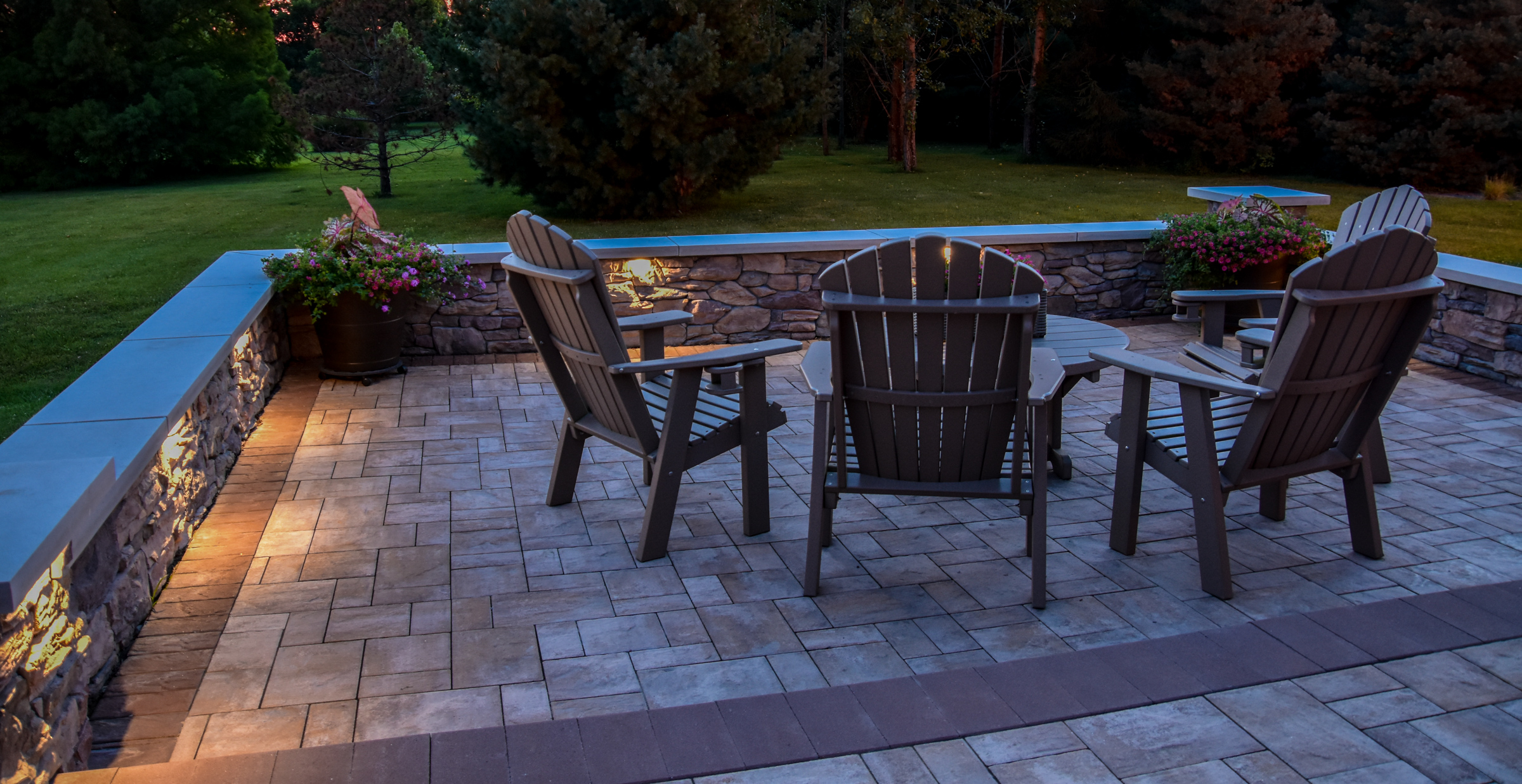
A patio is an outdoor home improvement option that instantly adds value to a property when it’s done right. This means that choosing the right patio material matters if you want it to offer you and your property all the benefits it can. Get it right, and you have a surface that looks good and holds up for decades. Get it wrong, and you are patching cracks, dealing with uneven surfaces, chasing weeds, or replacing the whole thing a lot sooner than you planned.
While there isn’t a single best material (most are pretty good), there is a best material for your budget, your soil, how you plan to use the space, and the weather/climate you deal with. You want to pick a material suited to all the conditions and stresses it might be exposed to over the years to come. This, plus proper installation, can make a patio a permanent fixture on your property that you won’t have to worry about.
Common Patio Materials:
Brick Pavers
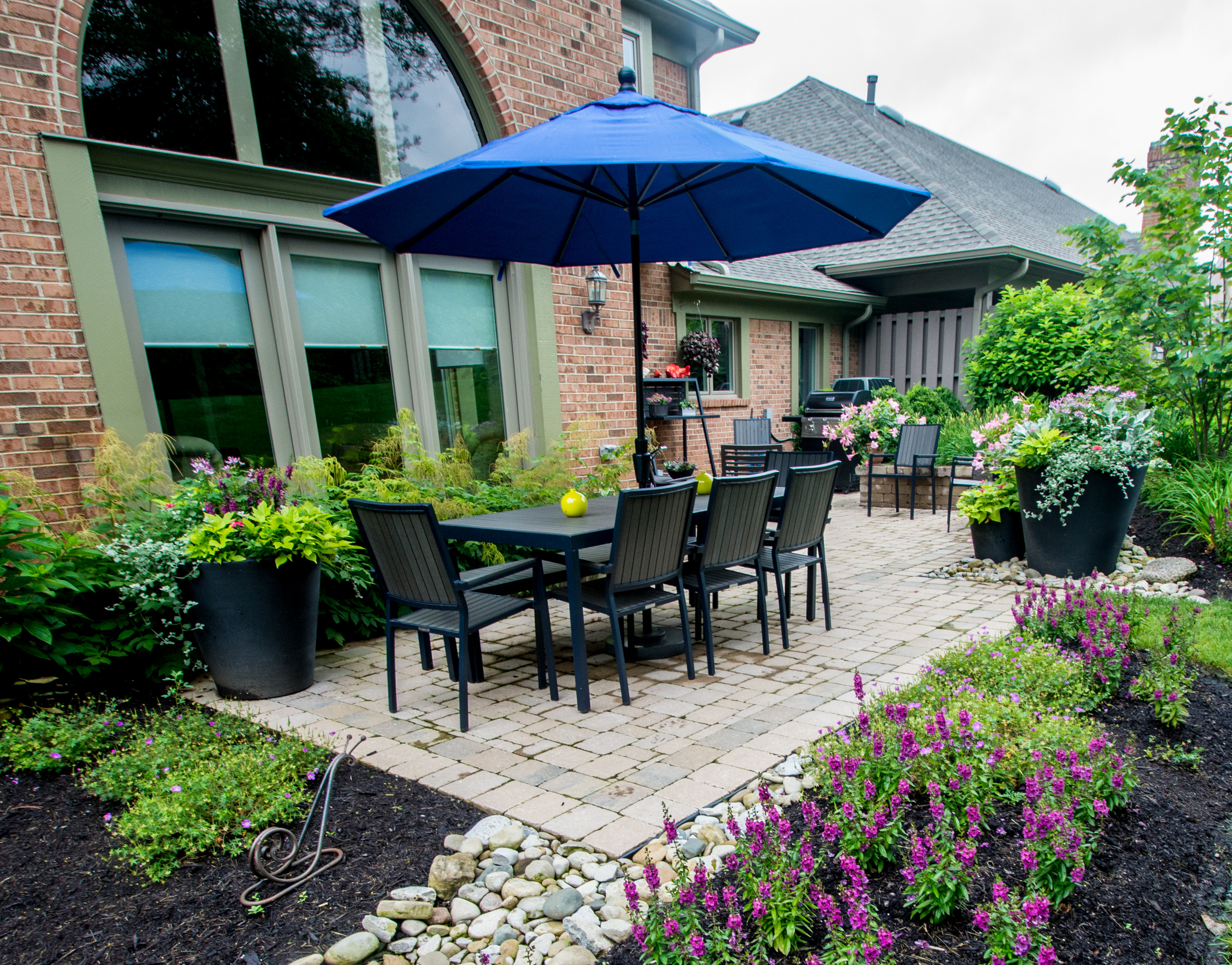
A brick patio is timeless for a reason, and it’s shown to work well in our climate. True clay brick is fired at high temperatures, producing a dense, frost-resistant material with very low water absorption. This a huge predictor of how well a material will withstand freeze-thaw cycles. That is what makes brick pavers a great option for Midwest patios and walkways for generations, and why they’ll do the same in your yard.
The look is warm and classic, with timeless appeal that suits a wide range of architectural styles, and patterns like herringbone and basket weave add visual interest without any change in material. Like concrete pavers, brick is installed as individual units over a compacted gravel base with edge restraints, and joints filled with polymeric sand to lock everything together and resist weeds. One honest word of caution: skimping on base compaction is the most common reason unit paving fails early, so proper installation is not the place to cut corners.
Natural Stone
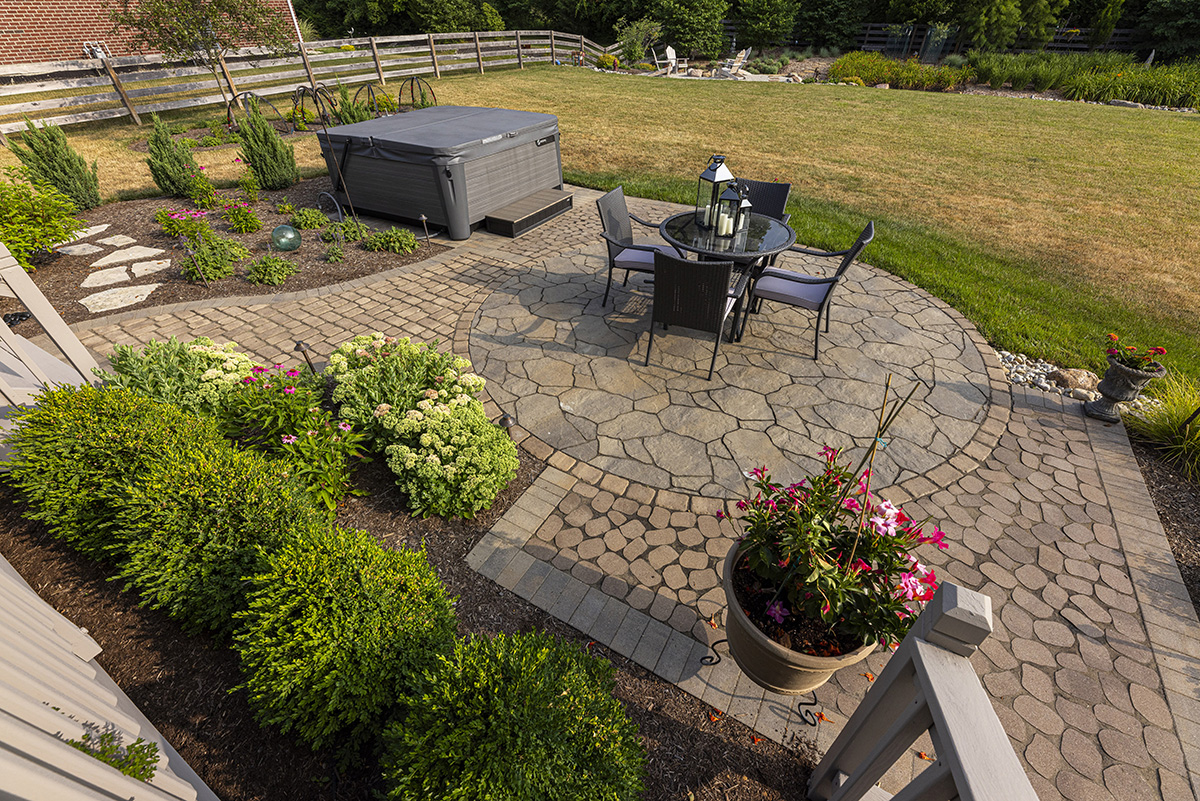
Natural stone delivers a high-end look and exceptional longevity that manufactured materials can approximate but rarely match. Cut stone, meaning stone sawn into uniform rectangles, reads as formal and architectural, so it suits homes where clean geometry is the goal. Bluestone and locally available limestone are strong regional choices with excellent durability when set on a proper base.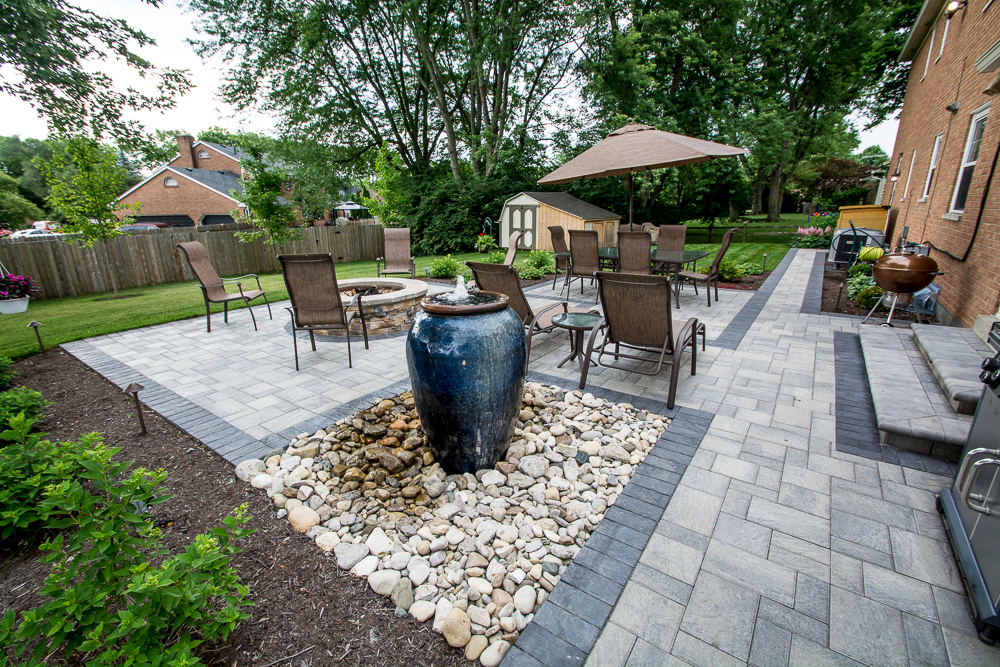
Flagstone is the same idea with an irregular edge, a naturalistic feeling, and warm earth tones that work beautifully together. Homeowners should keep in mind that natural stone sits at the higher end of the price range compared to other materials on this list.
Concrete Pavers
If you want the most versatile option for our climate, concrete pavers are hard to beat, and that versatility is a big part of why a paver patio is one of the most popular patio materials for Ohio homes. Interlocking pavers are individual units set over a compacted base, so the joints between them flex with the ground instead of cracking against it when the soil heaves. That flexibility pays off in a very practical way: when a paver settles or gets damaged, you lift and reset that one unit instead of repairing a whole slab.
Pavers also give you the widest range of looks and adapt to nearly any surface shape, including the curved edges and irregular shapes a poured slab handles awkwardly. They are extremely durable, resist cracking well, and hold up in high traffic entertaining areas and under the weight of heavy patio furniture. The honest tradeoff is cost: pricing typically runs higher upfront than poured concrete, often several dollars more per square foot depending on the product and pattern. For most homeowners, that premium is what buys decades of not thinking about their patio again.
Poured/Stamped Concrete
Poured concrete has the lowest upfront cost of the solid surfaces, so if you are working with a tight budget and a simple, flat, rectangular space on stable soil, it might be your choice. The issue is that concrete is rigid, and rigid surfaces crack when the ground beneath them moves. Ohio’s freeze-thaw cycles and clay soils create those issues, and even the best-done patios will still crack in time.
Stamped concrete also appeals to people because it’s a more affordable way to mimic the look of stone, brick pavers, or wood grain, and stained finishes expand your color options on a tighter budget. Just go in with clear eyes. Color fades over time, concrete patios require occasional sealing to prevent staining and slow freeze-thaw damage, and a crack running through a stamped pattern is harder to hide than one in a plain slab.
> Want a breakdown on concrete vs paver patios?
Read our full blog here. <
Raised Composite Decking Platform
Composite is technically a decking material rather than a patio paving material, but it comes up often enough as a low-maintenance alternative to be worth addressing. Its main draw is maintainence. There is no sealing, it doesn’t splinter, and it’s stain- and fade-resistant. For a raised platform or an outdoor living area off the back of the house, it is a great option that pairs well with outdoor furniture.
The main issue with this choice is heat. In full sun, composite can run much warmer than the surrounding air, and darker boards can get hot enough to be uncomfortable to walk on barefoot. Paver patios are still the best option for your outdoor space.
What Ohio’s Climate Means for Your Choice
Here in southwest Ohio, we sit in USDA Hardiness Zones 6a and 6b, with hard freezes every winter and ground that freezes and thaws repeatedly throughout the season. Clay soils make it worse, because clay expands when wet and contracts when dry, creating constant movement beneath whatever you install.
Dense, low-absorption materials that are set to move handle temperature fluctuations best, while rigid, high-absorption surfaces struggle. That is why brick, high-quality concrete pavers, and dense natural stone resist cracking and outlast poured concrete in our weather conditions.
The Best Investment
When you are planning a new patio, budget usually sets your starting range, but you should try to think in terms of lifetime costs. Poured concrete is cheapest per square foot and loose materials are cheaper still, while pavers, brick, and natural stone cost more upfront and generally hold their value and appearance longer. You’ll end up paying more in the long run if you choose the cheaper, less durable material today to save money in the short term.
How to Choose the Right Patio Material
- First, rank your five priorities so you know whether durability, budget, maintenance, use, or design preferences is leading.
- Second, walk your site and note the sun exposure, the slope, and how water moves after a heavy rain.
- Third, narrow it to two materials that fit both, then view samples in person, since color and texture almost never look the same on a screen as they do in your yard.
From there, get quotes for your top options, and ask each one specifically how they handle base preparation and drainage, because proper installation is where quality is won or lost. The visible material is only ever as good as the base underneath it, and that base is the one part you cannot fix later without starting over.
Not sure where to start? We can walk you through it to help you design and install the patio of your dreams.
>Thinking about landscaping around your new patio? Read our blog “Patio Landscaping Ideas for Your Backyard“<
 About Grunder Landscaping Co.
Grunder Landscaping Co. has been designing, installing, and maintaining landscapes in the Dayton area since 1984 and the Cincinnati area for more than a decade. We know this climate well, from the harsh winters and freeze-thaw cycles that test every hardscape to the materials that consistently hold up in southwest Ohio. Whether you are starting from scratch or improving an existing outdoor living space, our team of designers and installers is here to help you choose the best patio material for your property.
get started