
How Do You Know When You Need a Retaining Wall?
Retaining walls are for areas where mulch drifts onto the driveway after a hard rain, where the corner of the yard is too steep to mow, or where the slope never fills with grass.
It holds soil where you want it, and it turns ground you haven’t been able to use into level, usable space for a patio or more usable lawn. In southern Ohio, where clay soil holds water and the ground freezes and thaws all winter, walls are a reliable way to work with a tricky site rather than around it. Here’s how to tell whether your yard would benefit from one, and what to weigh before you build.
Signs You Need a Retaining Wall
The clearest signals come from the yard itself. Any one of these is worth a closer look: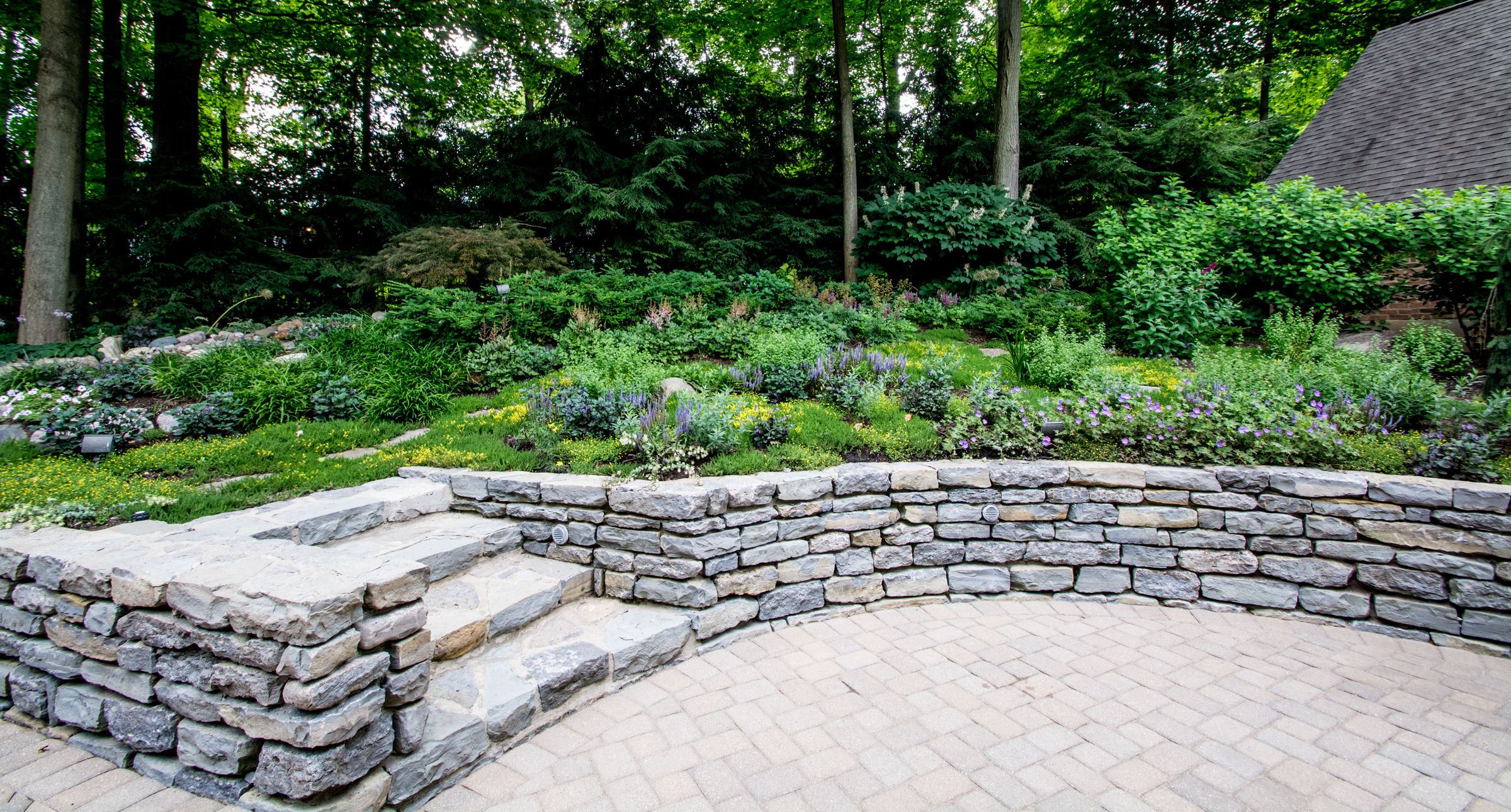
- Soil erosion on a slope: Bare patches, exposed roots, and channels cut into a hillside after heavy rain all point to soil on the move.
- Dirt and mulch washing onto hard surfaces: If you’re sweeping soil off the driveway or patio after every storm, runoff is pulling material downhill faster than the your beds can hold it.
- A slope too steep to use or mow: Terracing that ground into level tiers turns a wasted, hard-to-maintain area into space for a backyard patio, garden, or lawn.
- Water pooling or running the same path every time: Standing water and repeat runoff channels mean the site isn’t managing water well on its own.
- New cracks near your foundation: Cracks in a foundation, slab, or walkway can signal soil and water pressure building against the structure, and are worth having assessed promptly.
- You want to carve out level, usable space: On a sloped lot, a wall is often the only practical way to gain a flat area for a patio, fire pit, or planting beds.
- An awkward or unsafe grade change: A steep drop-off between levels of the yard can be a trip hazard, and a wall creates a clean, defined transition.
- Bald spots where nothing will grow: A bank that keeps eroding loses the topsoil plants depend on, leaving patches that reseeding alone won’t fix.
Signs You Might Need to Replace an Old Retaining Wall
A retaining wall should last decades, but not all of them do. When one fails, the reason almost always traces back to what happened below the surface: poor drainage, a base that wasn’t compacted, or no reinforcement behind a wall tall enough to need it. You might need to replace your old wall if:
- Leaning, bulging, or bowing: A wall tilting away from the slope or bowing through the middle is losing its hold on the soil, and it tends to get worse once it starts.
- Separating joints or shifting blocks: Gaps opening between stones, or courses that no longer line up, usually mean the base or backfill has given way.
- Cracking, spalling, or rot: Cracked blocks, flaking concrete, or soft, rotting timber all signal a wall breaking down, and rotted timber can’t be repaired.
- Water stains or drainage problems: White mineral staining, constant dampness, or soil washing out from behind the wall point to failed or missing drainage.
A well-built replacement fixes what sank the first wall. Proper drainage, a solid base, and reinforcement suited to the wall’s height are what keep it standing for decades, and they matter far more than the material on the face. Get those fundamentals right, and choosing between stone, block, or another finish becomes a matter of taste rather than a question of whether the wall will hold.
Building Materials and Structural Options
The right material depends on your soil, the height of the wall, and the look you’re after. A few of the most popular residental choices:
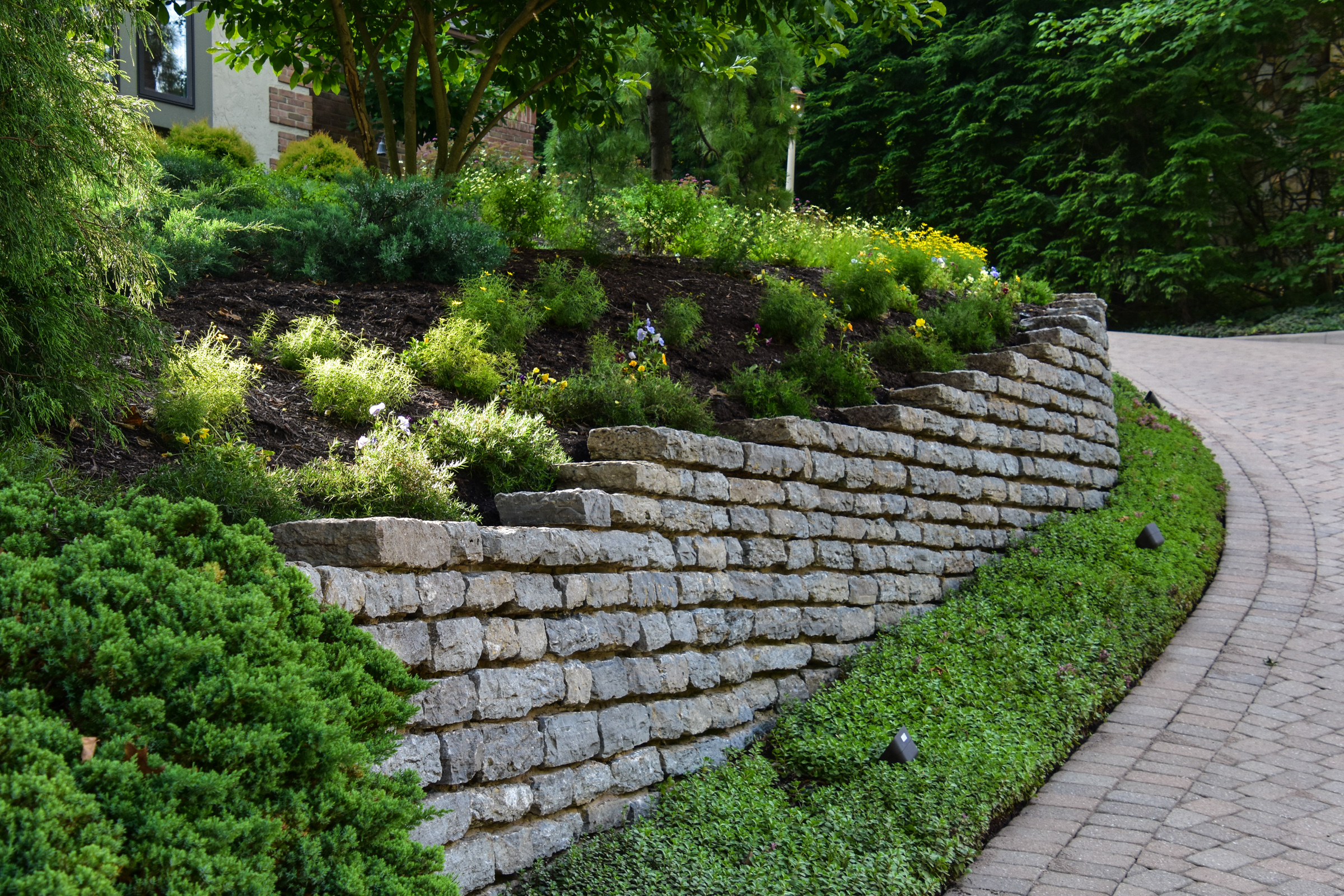
Natural stone
Fieldstone and locally quarried limestone handle Ohio’s freeze-thaw cycles well and read as part of the landscape rather than imposed on it. It’s the premium option and tends to hold its appeal longest.
Segmental Concrete Block
Manufactured retaining wall blocks are durable, engineered to interlock, and more budget-friendly than stone. They look more constructed, but they perform reliably and adapt well to curves.
Timber
Wood is the least expensive option and fine for low garden edging, but it has the shortest lifespan in wet clay soil and isn’t the choice for anything holding back real pressure.
For taller walls, what’s behind the face matters more than the material on it. Anything holding back real height needs reinforcement tied into the soil and a drainage system to relieve water pressure. As a rule, the wetter and heavier your soil, the more of both a wall needs, which is why clay-heavy sites call for careful design rather than a stack-and-hope approach.
Blending a Retaining Wall Into Your Landscape
A wall doesn’t have to look purely functional. Choosing the right plants can soften a hard face and spill attractively over the edge, while a planting bed along the base ties the structure into the surrounding yard. Low-voltage lighting along the top or washed across the face adds depth after dark and highlights the stonework. Choosing a material and color that echoes your home’s exterior keeps the whole thing looking intentional rather than added on. The right material with the right finishing landscape touches can make a retaining wall a beautiful addition to your property.
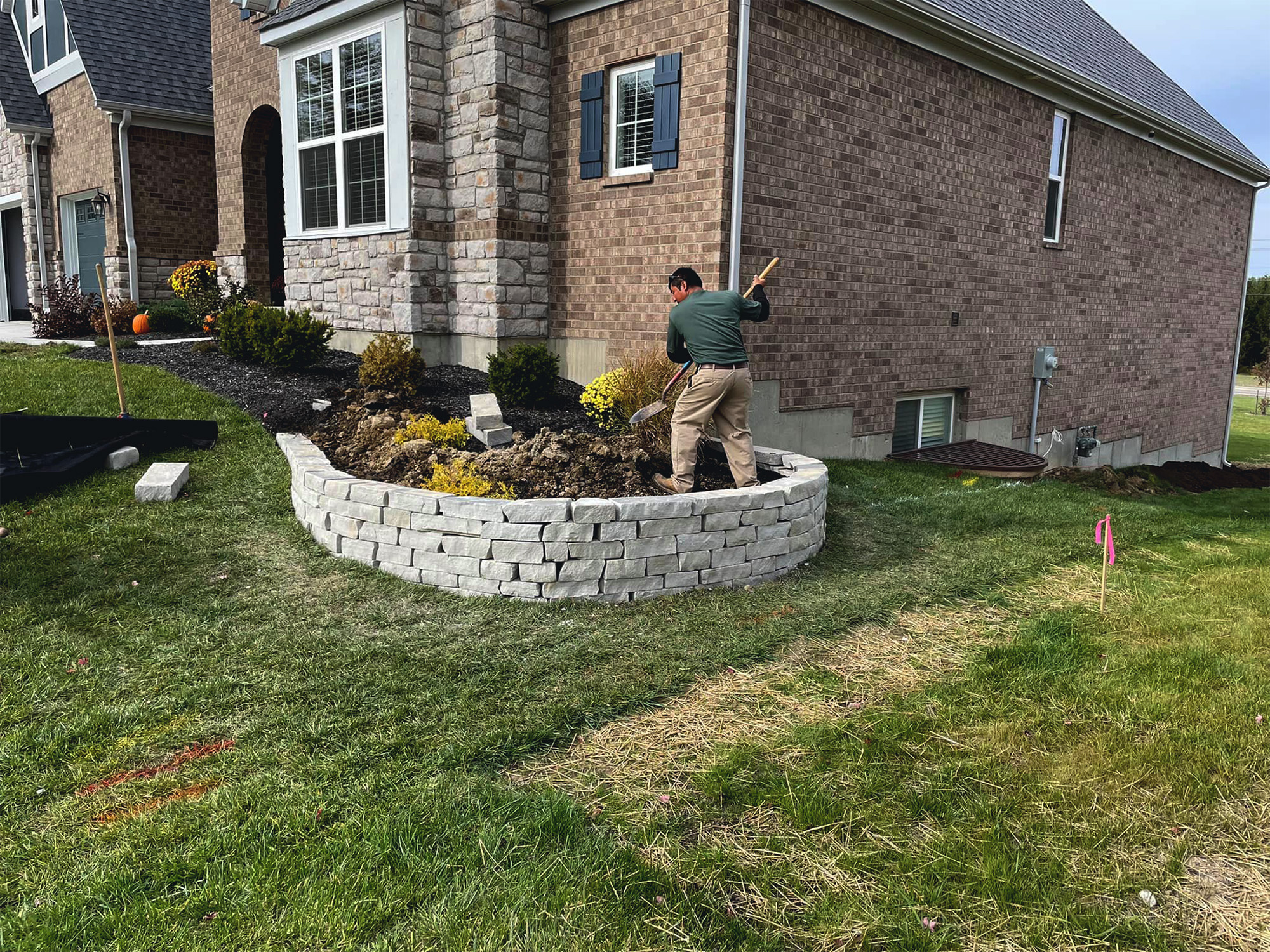
Retaining Walls and Property Value
Permanent hardscape features can appeal to buyers and increase property value because they read as finished and low-maintenance, and a wall that creates a usable patio, tames a slope that used to look neglected, or adds structured planting terraces improves both how a yard functions and how it looks from the curb.
Natural stone generally makes the strongest impression, since it ages gracefully and signals quality, though a cleanly built block wall adds appeal too. The return depends on the work being done well. A solid, good-looking wall is an asset, while a poorly built one becomes a liability that a buyer will notice. Quality installation is what keeps a wall on the right side of that line.
Cost, Permits, and Maintenance
Cost is driven mostly by wall height, length, material, and how much drainage and reinforcement the site requires, so a steep clay slope will run more per square foot than a short border on flat ground.
Permit rules vary depending on where you live, and many building departments require a permit and engineered plans above a certain height, so check with your local building department before you start.
Maintenance is light once a wall is built as long as it’s done well. Make sure to keep drainage outlets clear, watch for any new leaning or separating joints, and address small issues early before water turns them into big ones.
Quick Checklist: Do You Need a Retaining Wall?
Run through these prompts:
- Is soil eroding, or washing onto hard surfaces after rain?
- Do you see new cracks in a foundation, slab, or existing wall?
- Is an existing wall leaning, bulging, or separating?
- Is there a slope too steep to use or maintain safely?
- Does water repeatedly pool or channel in the same spots?
Prioritize anything touching your foundation or a failing wall first, since those carry the most risk. A yes to the slope or erosion questions usually points to a project worth planning. The best next step is to photograph the problem areas, then have a landscaping contractor walk the site with you to confirm what the ground needs.
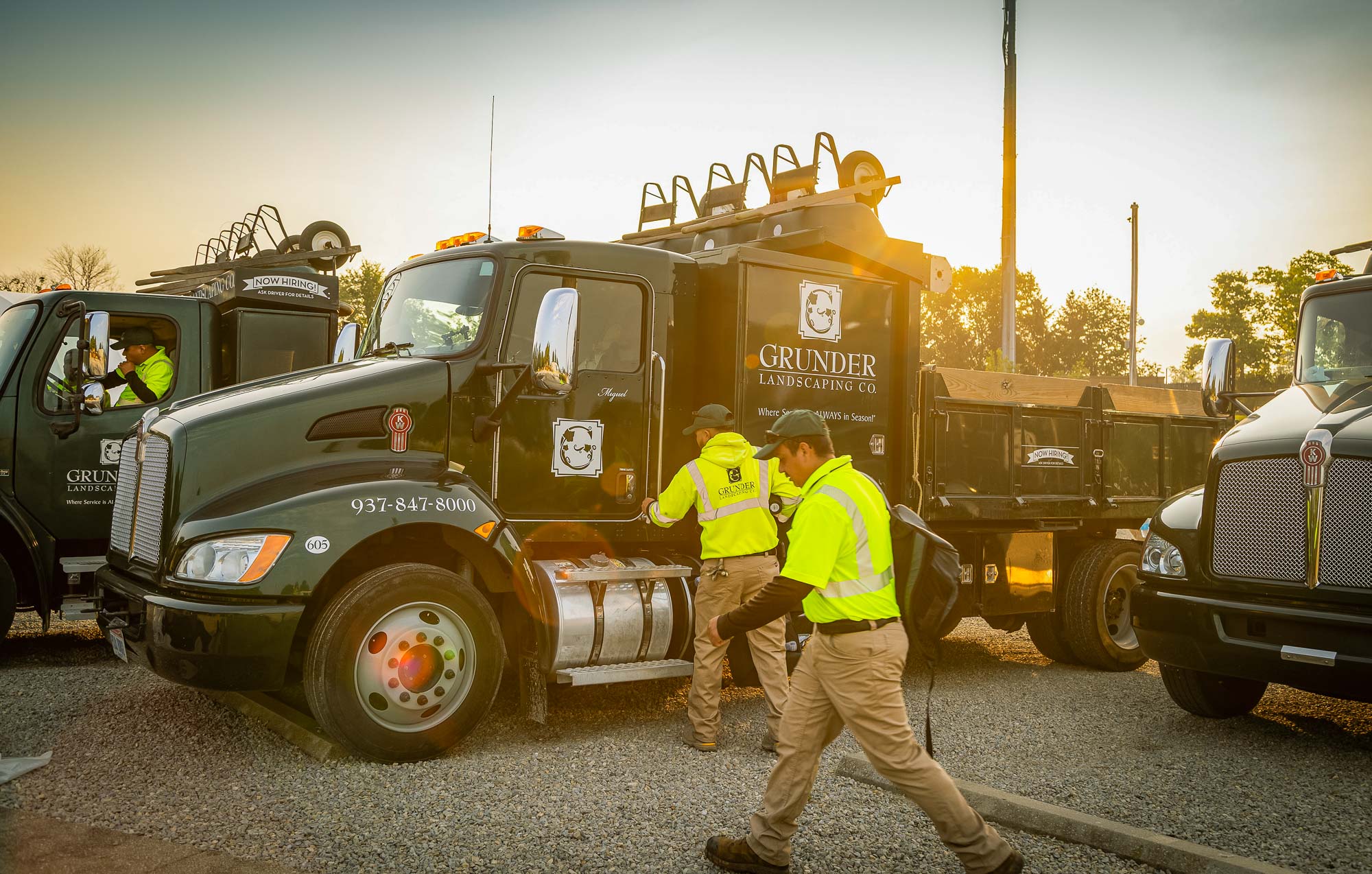 About Grunder Landscaping Co.
Grunder Landscaping Co. has been designing, installing, and maintaining landscapes in the Dayton area since 1984 and in the Cincinnati area for more than a decade. We know this climate well, from the clay soils and freeze-thaw cycles that test every wall to the drainage details that keep them standing for decades. Whether you’re managing a stubborn slope or fixing a wall that’s already failing, our team is here to help. Contact us to learn more.
get started