
Mulch vs Rock: Choosing the Right Ground Cover for Your Planting Beds
Walk through any garden center in spring and you’ll find both bags of shredded bark and pallets of river rock positioned as the obvious answer to bare planting beds. The truth is that neither material is universally better. Each performs well in specific situations and causes real problems in the wrong ones.
This guide breaks down how organic mulch and landscaping rock actually behave in planting beds, what each costs over time, and how to decide which one belongs in your yard.
What You’re Choosing Between
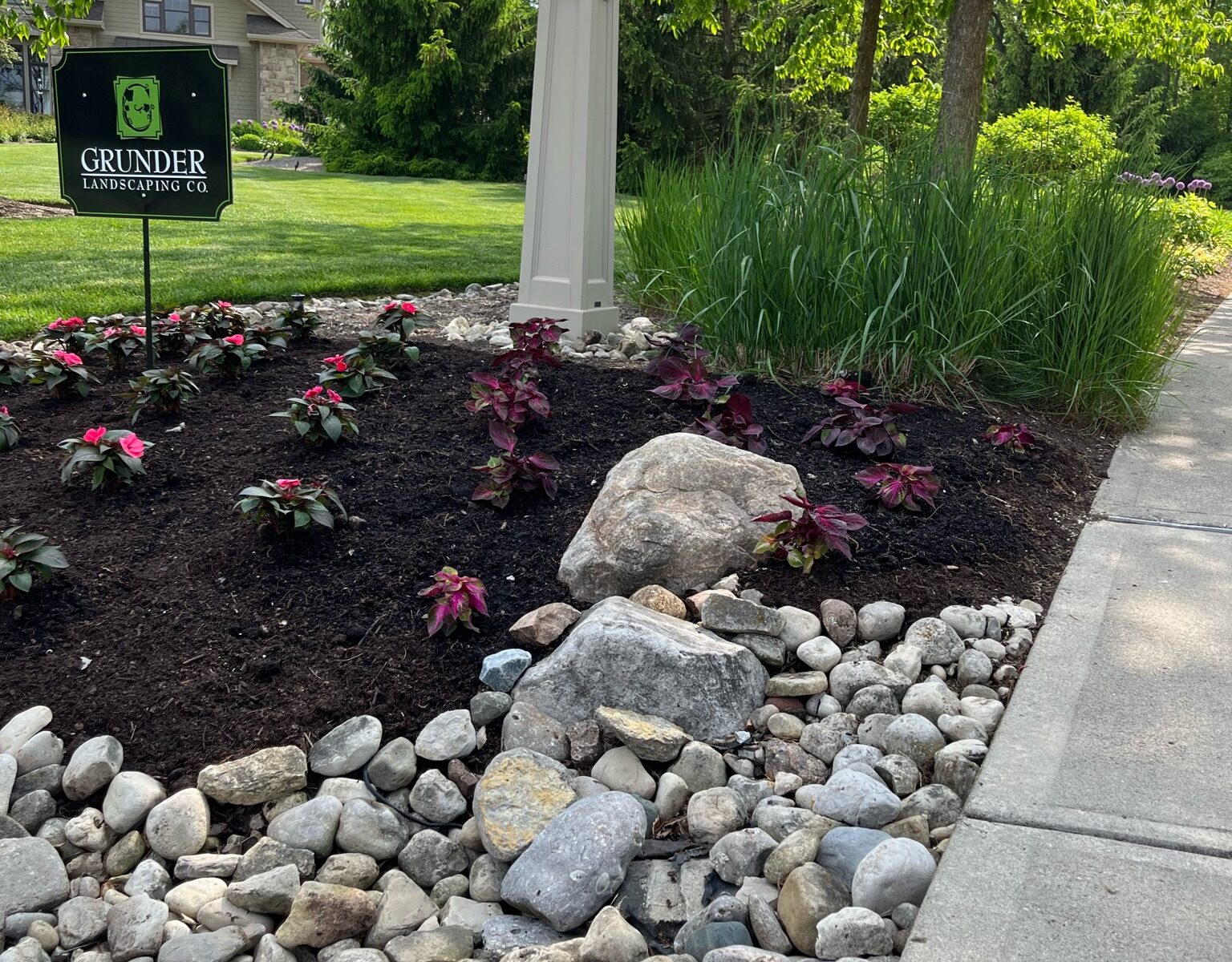
Bellbrook, OH
Organic mulch is any carbon-based material spread over the soil surface to protect and improve it. Shredded hardwood bark, wood chips, and finely ground bark mulch are the most common options for residential planting beds. All of them decompose over time, which is both their strength and the reason they need to be refreshed periodically.
Landscaping rock is exactly what it sounds like: stone spread over soil as a permanent or semi-permanent ground cover. River rock, pea gravel, crushed limestone, and lava rock are the most commonly used options. Unlike mulch, rock does not break down, which means it stays put but adds nothing to the soil beneath it.
Both materials suppress weeds, reduce erosion, and give planting beds a finished appearance. Where they diverge is in how they affect soil health, how they behave in Ohio’s climate, and how much work they require over time.
How Mulch Performs in Planting Beds
Mulch is the most common ground cover choice for residential planting beds, and for good reason. It’s affordable, widely available, and straightforward to apply. A fresh layer each season is one of the simplest things you can do to keep your beds looking well-maintained.
Moisture Retention:
Mulch retains moisture effectively, slowing evaporation from the soil surface and reducing how often beds need supplemental watering during dry stretches. In a humid Ohio summer, that might not seem like much, but in a dry July or August, it matters. Mulch also moderates soil temperature, keeping roots cooler in summer and more insulated through winter, and it suppresses weeds by blocking light from reaching seeds in the soil below.
For perennial beds and any area where you’re adding or moving plants regularly, mulch is a great choice. It’s easy to pull back, easy to work into, and won’t get in your way when it’s time to make changes to the bed.
The tradeoff is that mulch needs to be refreshed. Depending on the type, it typically breaks down over one to two years in Ohio’s climate. For most homeowners, this is handled as part of a regular landscape maintenance routine in spring or fall, but it’s worth factoring in if you’re managing your beds on your own.
Depth:
Two to three inches is the target. More than that and you risk keeping the soil too wet, creating habitat for lawn and garden pests, and suffocating plant roots. Keep mulch pulled a few inches away from the base of shrubs and the crowns of perennials. Mulch piled against stems traps moisture and creates conditions where rot and disease take hold.
Leaf Mulch for Annual Beds
Annual Beds
Standard wood mulch works well around shrubs and perennials, but annual flower beds are a different situation. Annuals have shallow root systems that feed in the same surface layer where wood mulch breaks down, and that decomposition process can compete with your plants for nitrogen. The result is often slow growth or yellowing that’s easy to mistake for a watering or disease problem.
For annual beds, composted leaves are a better fit. They break down quickly, release nutrients into the soil rather than competing for them, and create conditions where annuals can actually flourish. It’s the kind of detail that makes a real difference in how your beds perform, and the kind of thing a knowledgeable landscaper will consider when recommending materials for your specific plantings.
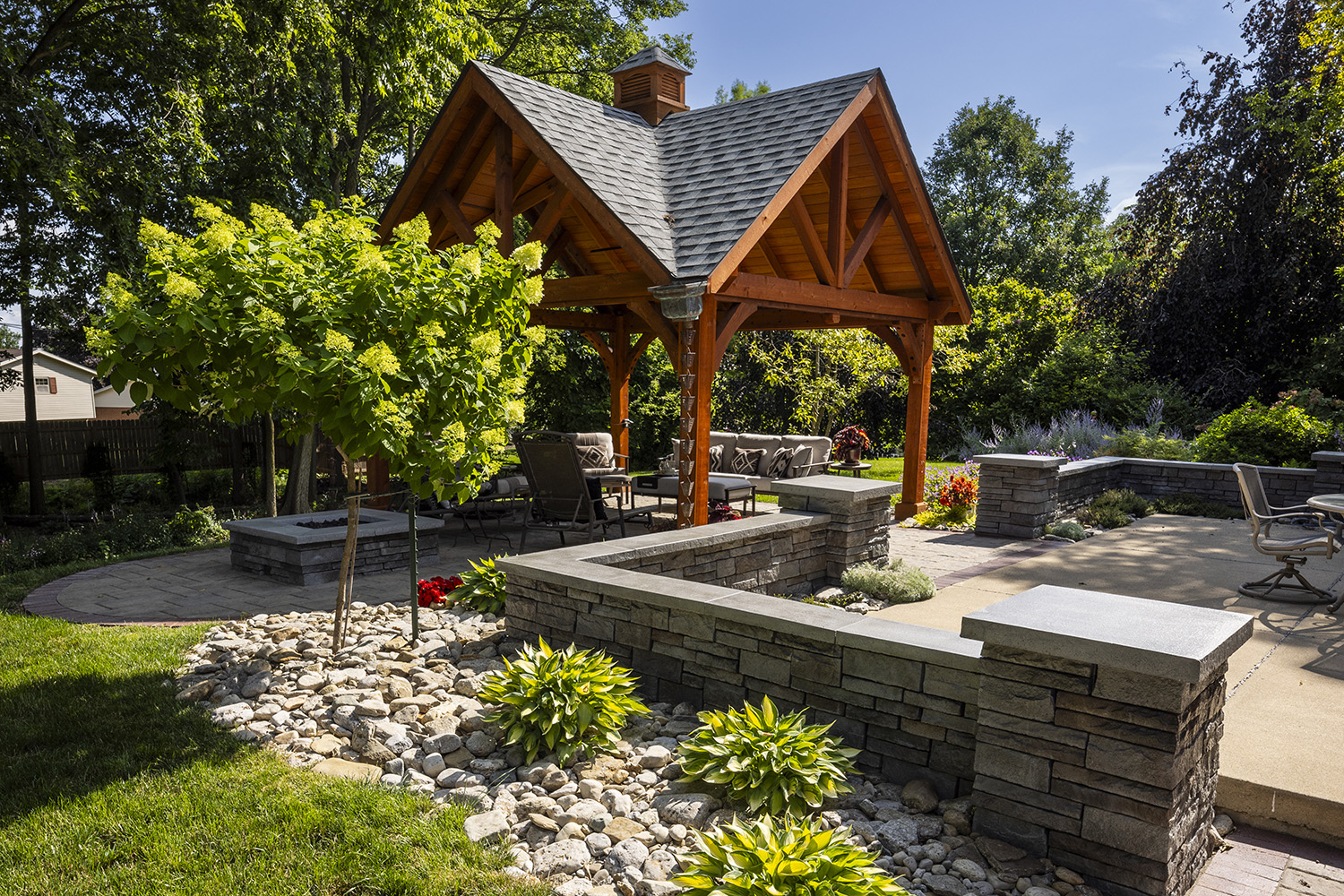
Mason, OH
How Landscaping Rock Performs in Planting Beds
Rock’s main advantage is longevity. Once installed, it essentially stays there. It doesn’t break down, doesn’t blow around in moderate wind the way light mulch can, and doesn’t need to be refreshed every year or two. For areas where low long-term maintenance is the priority, that’s a real benefit.
Rock also handles erosion well on slopes and in high-traffic areas where foot traffic or heavy rain routinely displaces mulch. Larger river rock and chunky crushed stone hold their position better than any organic material, which makes them practical choices for drainage swales, slope stabilization, and areas near downspouts.
Where rock requires more thought is in bed selection. It’s a great fit for areas you’re not planning to change, and it pairs naturally with drought-tolerant or low-maintenance plantings. If you have a bed where you expect to add or move plants regularly, mulch will be easier to work with over time.
Factor |
Mulch |
Landscaping Rock |
|---|---|---|
| Moisture retention | Strong | Moderate to poor |
| Weed suppression | Good with consistent depth | Good with adequate depth |
| Heat retention | Moderate | High, especially dark stone |
| Lifespan | Refresh every 1-2 years | Largely permanent |
| Upfront cost | Lower | Higher |
| Long-term cost | Ongoing replacement | Minimal after installation |
| Best for | Active plant beds, perennials | Slopes, drainage areas, low-maintenance zones |
Cost: What You’re Actually Paying Over Time
Rock costs more upfront. A cubic yard of river rock runs significantly more than a cubic yard of shredded hardwood mulch. For larger beds, that difference adds up quickly.
Where the math shifts is over time. Mulch needs to be refreshed every year or two, which means ongoing material and labor costs. Rock installed once stays put. For a homeowner who plans to maintain a bed for ten or fifteen years without changing its plantings, rock can be the more economical choice over that horizon, even accounting for higher upfront cost.
For a bed you expect to change, or one where the plants are the priority, the calculus goes the other way. Refreshing mulch is straightforward. Working around rock every time you want to plant something new adds real time and effort to what should be a simple task.
When to Choose Mulch
Mulch is the right choice for most active planting beds. It makes sense when:
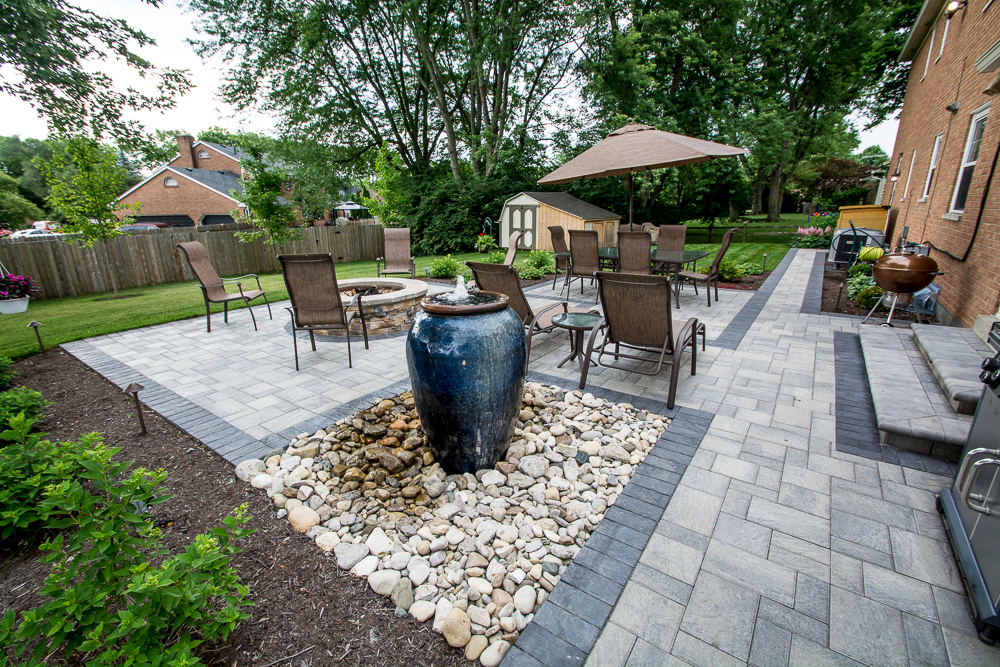
Madeira, OH
- Your beds include perennials, annuals, or a mix of plants you plan to add to or change over time
- The plants you’re growing prefer consistent moisture
- You’re covering a larger area and upfront material cost is a factor
- You want something easy to source, apply, and refresh season to season
When to Choose Rock
Landscaping rock earns its place in specific situations. It makes sense when:
- The bed is on a slope or in an area prone to erosion where mulch consistently displaces
- The planting design is intentionally low-maintenance and drought-tolerant, with plants that won’t be moved
- The aesthetic calls for a clean, modern, or xeric look where organic materials don’t fit
- The area sees heavy foot traffic or is near a downspout where organic material would scatter
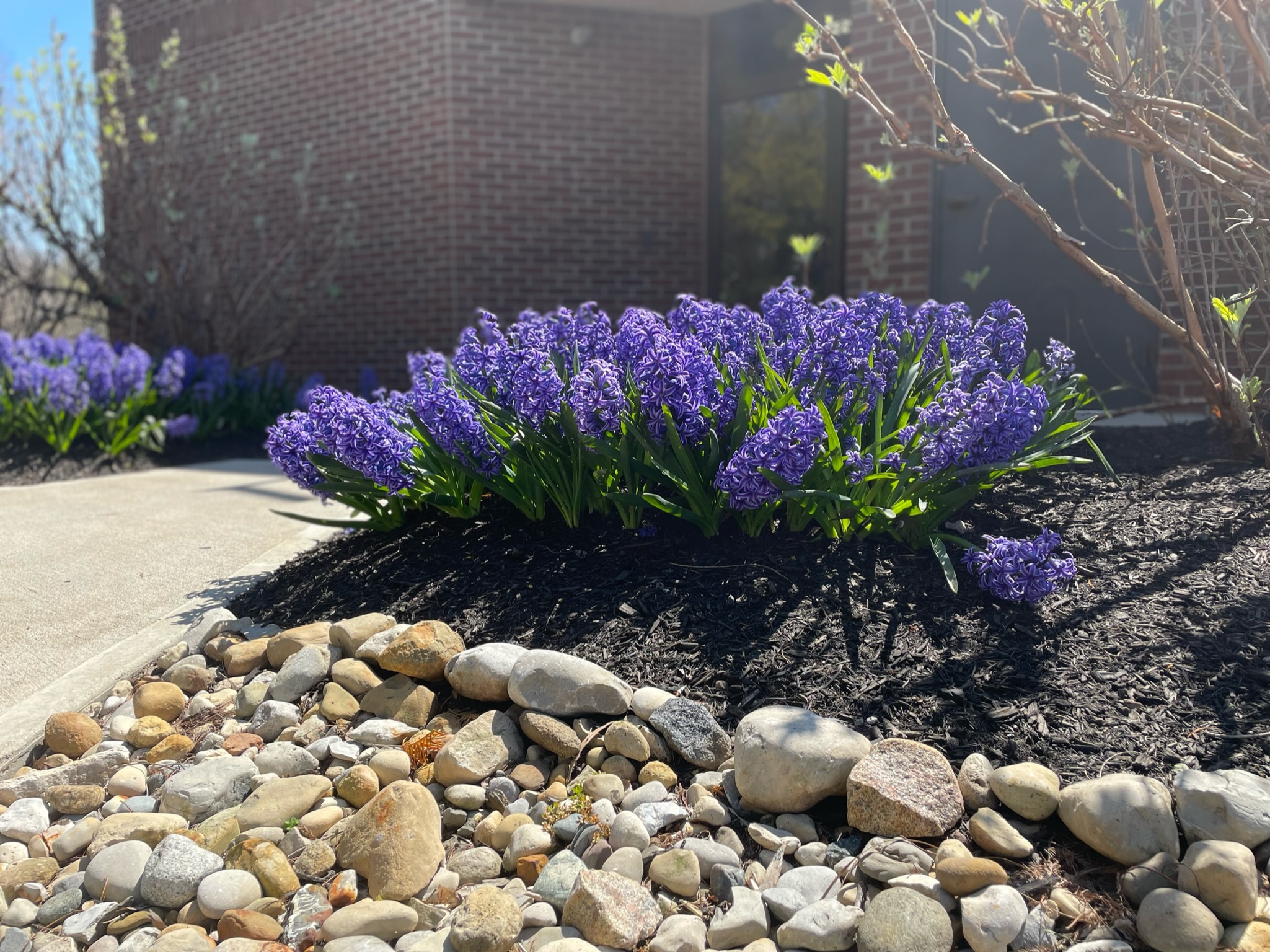
Moraine, OH
Combining Both Materials
Rock and mulch don’t have to be an either-or decision. Some of the best-looking residential landscapes use both, with organic mulch in planted beds and stone in pathways, borders, or transitional zones between beds. A steel or stone edging strip between mulch and rock areas keeps each material in its zone and gives the design a clean, finished edge. If you’re curious about a hybrid approach, trying it in one defined area before committing to it across the whole property is a reasonable way to see how it looks and performs in your specific conditions.
A Few Things Worth Avoiding
- Piling mulch against stems and trunks: This is the most common mulch mistake and one of the most damaging. Maintain a gap between mulch and the base of any plant.
- Going too deep with either material: More than three inches of mulch or a very thick layer of rock can both cause drainage problems and deprive roots of oxygen.
- Skipping soil preparation: Neither material performs well over compacted, weedy, or poorly graded soil. Pulling weeds, loosening the soil surface, and addressing any drainage issues before you install anything will pay off for years.
- Choosing rock without thinking through plant needs: Rock beds work for the right plants. Putting sensitive perennials under dark stone in full sun sets you up for frustration.
About Grunder Landscaping Co.
Grunder Landscaping Co. has been designing, installing, and maintaining landscapes in the Dayton area since 1984 and has served the Cincinnati market for more than a decade. We know this climate well, the clay soils, the humid summers, the freeze-thaw cycles that test every hardscape decision. Whether you’re sorting out a single bed or rethinking your entire property, our team is here to help. Contact us to learn more.
get started