
How Much Does a Patio Cost in Ohio?
Pricing disclaimer: The prices in this article are general estimates based on typical market ranges at the time of writing. They do not reflect Grunder Landscaping Co.’s current pricing and should not be treated as a quote. Every project is different, and costs change over time. For an accurate price on your patio, contact our team for a consultation.
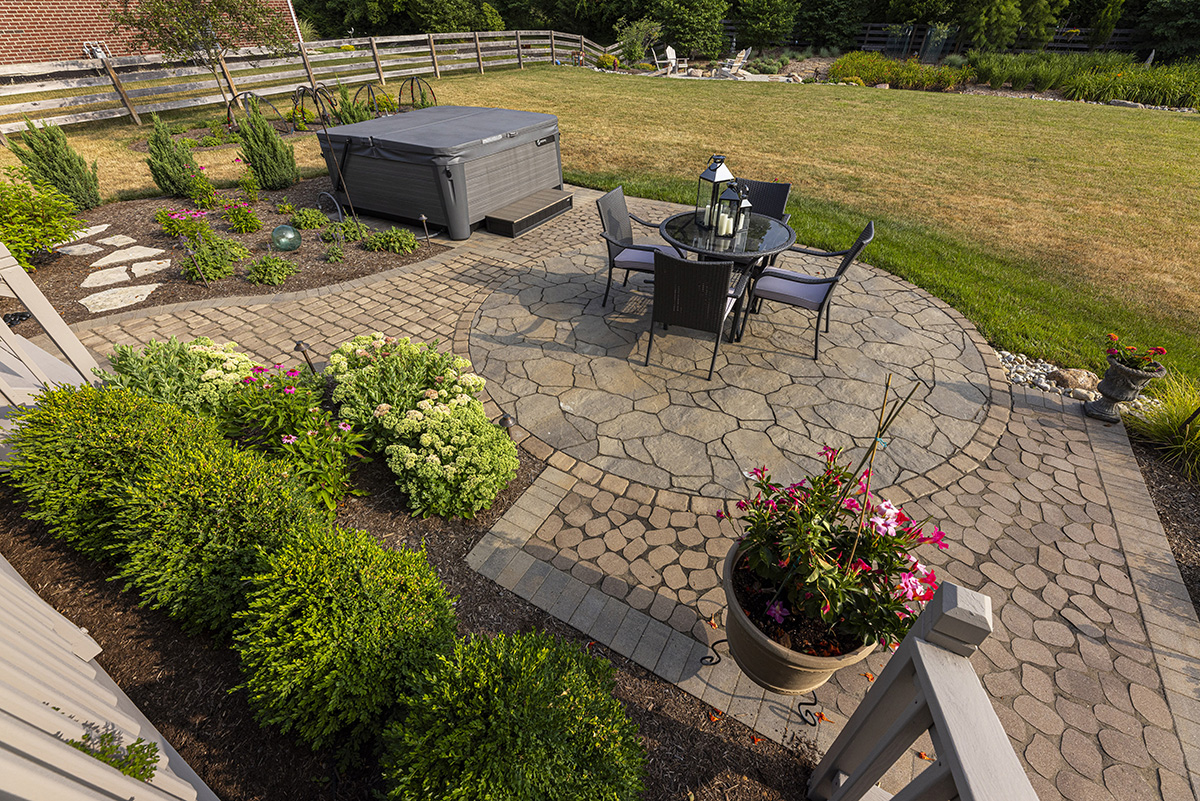
A new patio is one of the best ways to add usable living space to your home.
It’s where morning coffee happens, where friends gather around a fire pit on cool fall nights, and where a yard starts to feel like an extension of the house. Before any of that, most homeowners want to know one thing: what will it cost?
Here’s the direct answer, followed by what shapes the price and a Good / Better / Best example of one patio priced three ways.
The Short Answer
In southwest Ohio, a professionally installed patio typically costs $25 to $55+ per square foot, depending mostly on material and site conditions. For a 300 to 400 sq ft patio, a common size off the back of a home, most homeowners invest $12,000 to $35,000.
A simple paver patio on a flat, accessible site lands at the low end. A premium slab patio with a seat wall, fire pit, and outdoor lighting lands at the high end or beyond.
Quick Answers:
- How you plan to use the space determines the patio size and features you need, and that drives cost more than anything else.
- Labor and site preparation make up the largest share of the total cost.
- Proper base preparation matters most in Ohio’s clay soils and freeze-thaw winters.
- Planning for future features up front is far cheaper than adding them later.
Start With How You’ll Use the Space
The right patio depends on how you’ll live in it. Deciding that up front keeps you from paying for space you won’t use, or ending up with a patio that feels cramped the first time you host.
A Space for You and a Few Others
If the patio is mostly for your household and the occasional guest, a small patio with one well-planned zone is usually enough: a table for four or a pair of lounge chairs, with room to walk around them comfortably. A smaller footprint frees up budget for a better patio material, a fire pit, or a few lights.
A Space for Hosting
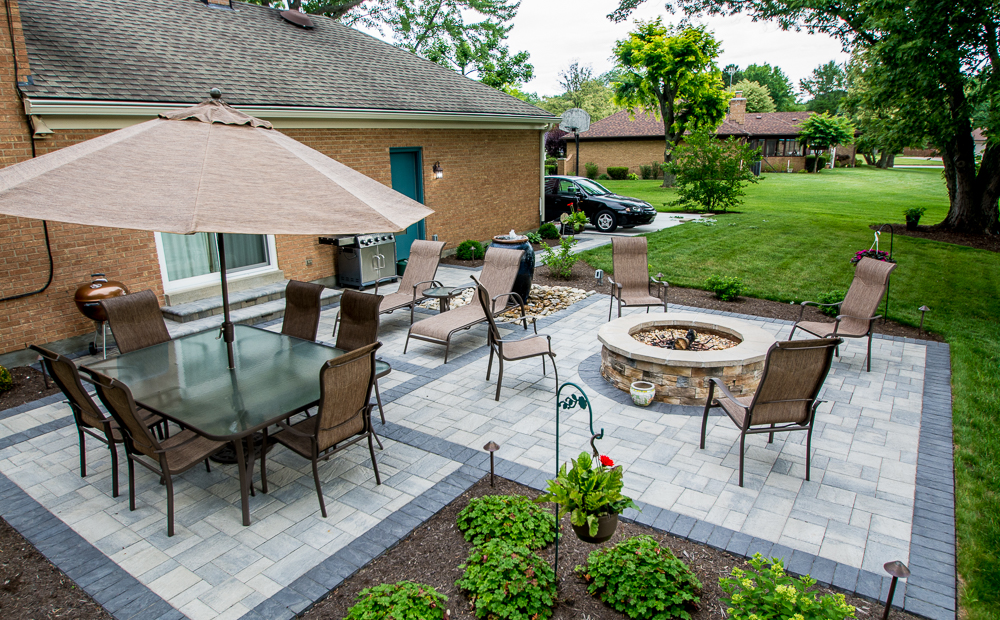
If you regularly entertain larger groups, layout matters as much as size. A few features make the biggest difference:
Separate Zones
A dining area, a lounge area, and a fire pit area let groups spread out naturally instead of crowding around one table. Zones can be defined by layout, a change in paver pattern, or a slight change in level.
Seat Walls
Seat walls provide overflow seating without adding furniture, which is exactly what you need when guest counts swing from eight to twenty. They also define the edges of the space.
Room to Move
Clear walkways between zones and to the back door keep traffic flowing when the patio is full. An undersized patio is one of the most common homeowner regrets.
Lighting, Shade, and Cooking
Outdoor lighting keeps the space usable after dark, a pergola or patio cover adds shade, and an outdoor kitchen keeps the host part of the party. A fire pit stretches the season into late fall. Not every patio needs all of these, but a hosting space usually benefits from at least one or two.
Patio Costs Per Square Foot by Material
These ranges include material, labor, and standard base preparation on a reasonably flat, accessible site.
| Material | Installed cost per sq ft |
| Concrete pavers | $25 to $40 |
| Brick pavers | $30 to $45 |
| Premium slabs (Techo-Bloc Blu 60) | $35 to $55 |
Concrete Pavers 
A paver patio is built from individual units over a compacted base, so it flexes with the ground instead of cracking, and damaged pavers can be replaced one at a time. For most Ohio homeowners, paver patio cost is the sweet spot between price, durability, and design flexibility.
Brick Pavers
Brick pavers have a warm, classic look that pairs well with traditional homes, and the color runs all the way through the clay. They cost a bit more than concrete pavers and come in fewer shapes and sizes.
Premium Slabs: Techo-Bloc Blu 60
Many homeowners are drawn to the look of natural stone like flagstone or natural bluestone. The product install most often to deliver a refined, stone-inspired look is Techo-Bloc’s Blu 60, a dry-cast concrete slab available in a Slate texture inspired by natural slate or a Smooth texture for a cleaner, contemporary look. We use it because it’s engineered to resist freeze-thaw cycles and de-icing salts, it’s backed by Techo-Bloc’s transferable lifetime warranty for residential use, and its three modular sizes create patterns that feel custom. An HD² version offers a denser surface and longer-lasting color.
Poured concrete slabs and gravel patios can cost less upfront, but concrete is prone to cracking in freeze-thaw climates and gravel shifts underfoot. For a closer look at that tradeoff, read our blog: Pavers vs Concrete for Patios: Which One Is Right for Your Home?
What Drives the Total Cost
Labor Costs
Labor typically makes up 50 to 60 percent of a professionally installed patio. Excavation, hauling soil, building the base, and cutting and setting the surface all take time, and intricate patterns or natural stone require more labor.
Site Preparation and Base Preparation 
This is where a long-lasting patio is made or lost. Proper base preparation means excavating below ground level, then installing compacted gravel in layers with a plate compactor. The crushed stone contains larger stone and small aggregates that lock together tightly when compacted. Ohio’s clay soil holds water and shifts with every freeze and thaw, and a thin or poorly compacted base is the most common reason patios settle or develop trip hazards.
Site Conditions, Access, and Drainage
Slopes, tree roots, and hard to reach areas where materials must be moved by hand all add labor. Every patio should pitch slightly away from the house, and sites with standing water may need French drains or permeable pavers. Proper drainage costs far less during installation than after.
Patio Size and Shape
Larger patios cost more overall, but the price per sq ft usually drops as size increases. Rectangular patios are the most efficient to build, while curves, borders, and complex patterns add cutting and labor.
Retaining Walls and Building Permits
Sloped yards may need retaining walls to create flat space. Many ground-level patios don’t need a building permit, but walls, a patio cover, gas lines, or electrical work may. Requirements vary by municipality, so check with your local building department or landscaper.
Good, Better, Best:
The scenario: a roughly 400 sq ft patio off the back of a home, at ground level, with reasonable access and typical southwest Ohio clay soil.
Here is an example of what different pricing could look like given everything we’ve talked about:
| Good | Better | Best | |
| Surface | Standard pavers | Premium pavers | Techo-Bloc Blu 60 HD² |
| Seat wall | No | Yes | Yes, with caps |
| Fire pit | No | No | Yes |
| Lighting | No | A few lights | Full design |
| Estimated total | $12,000 to $16,000 | $22,000 to $30,000 | $45,000 to $65,000+ |
Popular Patio Upgrades
| Upgrade | Typical additional cost |
| Fire pit | $3,000 to $8,000+ |
| Seat wall | $150 to $300 per linear foot |
| Outdoor lighting | $2,500 to $7,500 |
| Patio cover or pergola | $8,000 to $25,000+ |
| Outdoor kitchen | $15,000 to $50,000+ |
If any of these are on your wish list, plan for them now. Running conduit, gas lines, or footers before pavers are set costs a fraction of retrofitting later.
DIY Paver Patio vs. Professional Installation
A DIY paver patio can save on labor plus equipment rental. And on the day, it’s finished, a DIY patio can look just as good as a professionally installed one.
The difference shows up over time, and it starts below the surface. Professional crews use heavy-duty compaction equipment, laser levels, and excavation machinery that most homeowners don’t have access to, and the lighter plate compactors available to rent often can’t achieve the same density, especially in Ohio’s dense clay. A base that isn’t fully compacted keeps settling after the patio is built. After a winter or two of freeze-thaw cycles, that usually means sinking or shifting pavers, uneven spots and trip hazards, water pooling where it should drain, and edges that start to spread.
These problems are rarely a quick fix. Because the issue is in the base, repairing it usually means pulling up the pavers, rebuilding the foundation, and relaying the surface, which can cost more than doing it professionally the first time. For any patio attached to your home, or one with a seat wall, fire pit, or slope, professional installation is the better long-term value.
Thinking about how you landscaping will look with your new patio? Read: Patio Landscaping Ideas for Your Backyard
 About Grunder Landscaping Co.
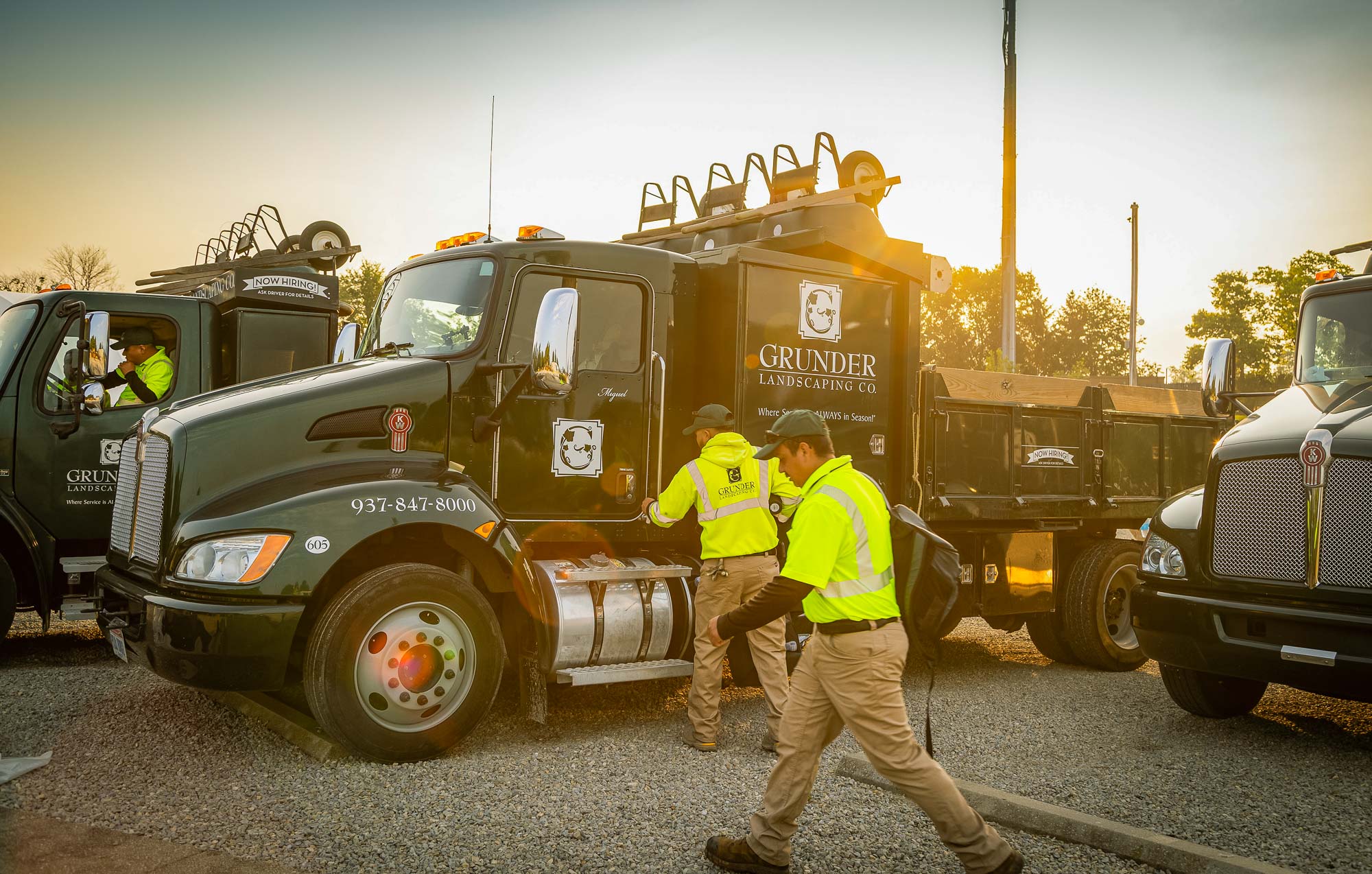
Grunder Landscaping Co. has been designing, installing, and maintaining landscapes in the Dayton area since 1984 and has served the Cincinnati market for more than a decade. We know this climate well, from the clay soils and freeze-thaw cycles that test every hardscape to the design details that make an outdoor space feel like part of your home. Whether you’re planning a quiet patio for two or a full outdoor living space for hosting, our team is here to help you build something that lasts.
Ready to find out what your patio would cost? Explore our Pools, Patios & Outdoor Living Spaces services or get started at grunderlandscaping.com.
get started